
You pull a rack of freshly washed glasses from your commercial dishwasher, expecting them to be clean and sparkling. Instead, they’re covered in spots, streaks, or a cloudy film.
Sound familiar?
A commercial dishwasher leaving spots can be frustrating, especially when you’re running a busy restaurant or commercial kitchen. Nobody wants to serve drinks in glasses that look dirty, even when they’ve just been washed.
Fortunately, cloudy glassware doesn’t always mean something is seriously wrong with your dishwasher. The problem could be related to water quality, rinse aid, chemical settings, or basic maintenance.
Let’s look at the most common causes, what you can check yourself, and when it’s time to call a professional.
1. Hard Water Can Leave Mineral Deposits on Glassware
One of the most common reasons for a commercial dishwasher leaving spots is hard water.
Hard water contains dissolved minerals, mainly calcium and magnesium. When water dries on glassware, these minerals can leave behind white spots or a cloudy film.
You might notice:
- White spots on glasses and dishes.
- A chalky film that wipes away with vinegar.
- Mineral buildup around spray arms or inside the machine.
- Glassware that looks cloudy even after another wash.
Hard water is a common concern for commercial kitchens, including those in Vancouver and the surrounding areas. However, water hardness varies by location and water source.
If your dishwasher uses a water softener or treatment system, check whether it’s working properly.
A technician can also test your water and recommend appropriate treatment if mineral buildup is affecting your equipment.
2. Your Commercial Dishwasher May Need More Rinse Aid
If you’re dealing with a commercial dishwasher leaving spots, rinse aid is another good place to look.
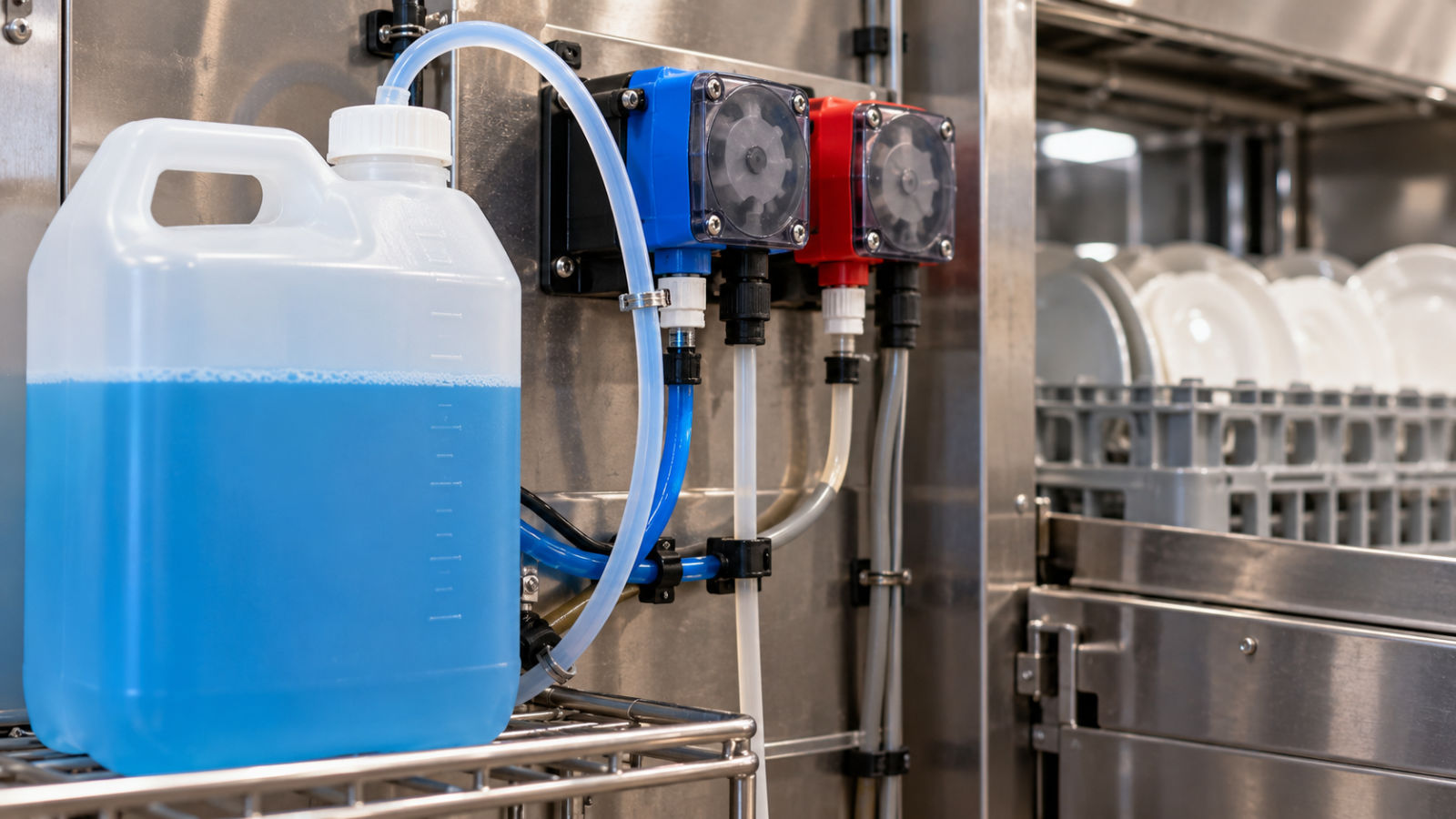
Commercial dishwasher rinse aid helps water spread evenly and drain off dishes and glasses. This reduces the droplets that can dry into visible spots.
Without enough rinse aid, water may cling to glassware instead of running off cleanly.
Start by checking the rinse aid container. Is it empty or running low?
If there’s plenty of rinse aid available, the problem could involve the dispensing system.
Commercial dishwashers use chemical pumps to deliver measured amounts of detergent and rinse aid. If the pump isn’t working correctly, your machine may not receive the right amount.
Don’t increase the chemical dosage without checking the manufacturer’s recommendations. Too much rinse aid can also cause streaking and other problems.
3. Incorrect Chemical Calibration Can Affect Cleaning Results
A commercial dishwasher leaving spots may also have a chemical calibration problem.
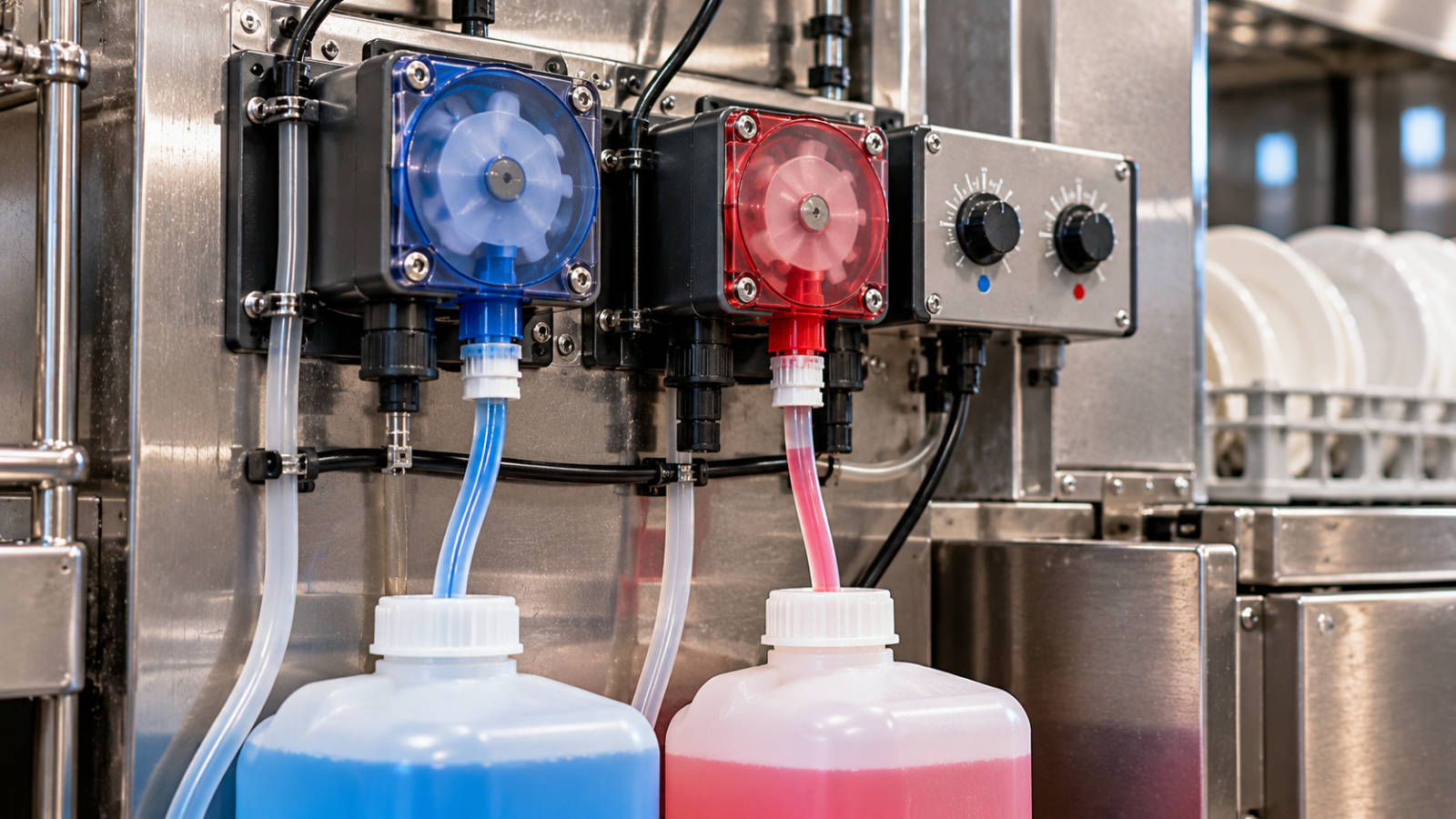
Commercial dishwasher chemical calibration means making sure the machine dispenses the correct amount of each chemical during its wash cycle.
These settings matter because commercial glasswasher chemicals must work together properly.
Too little detergent can leave food residue, grease, or film behind. Too much detergent may leave chemical residue if the machine doesn’t rinse properly.
The same applies to rinse aid.
Chemical requirements can vary depending on your dishwasher, water quality, and the products being used.
If your kitchen recently switched chemical suppliers or products, it’s worth having the dispensing system checked.
A trained technician can inspect the pumps, tubing, and settings to confirm that everything is working as intended.

4. Water Temperature Problems Can Cause Cloudy Glassware
Water temperature plays an important role in commercial dishwashing.
If you’re noticing a commercial dishwasher leaving spots, temperature problems could be contributing to poor cleaning or rinsing.
Water that’s too cool for the machine’s intended operation may struggle to remove grease and certain food residues. Temperature problems can also affect how well detergents perform.
However, commercial dishwashers don’t all operate at the same temperatures.
High-temperature machines use heat for sanitizing, while low-temperature machines typically rely on chemical sanitizers.
Each system has its own operating requirements.
Check your dishwasher’s temperature display, if available, and compare it with the manufacturer’s instructions.
Remember, clean-looking glassware isn’t necessarily properly sanitized.
For more information about safe food handling, review Health Canada’s food safety guidance.
If your dishwasher isn’t reaching its required operating temperature, stop using it until the problem has been assessed.
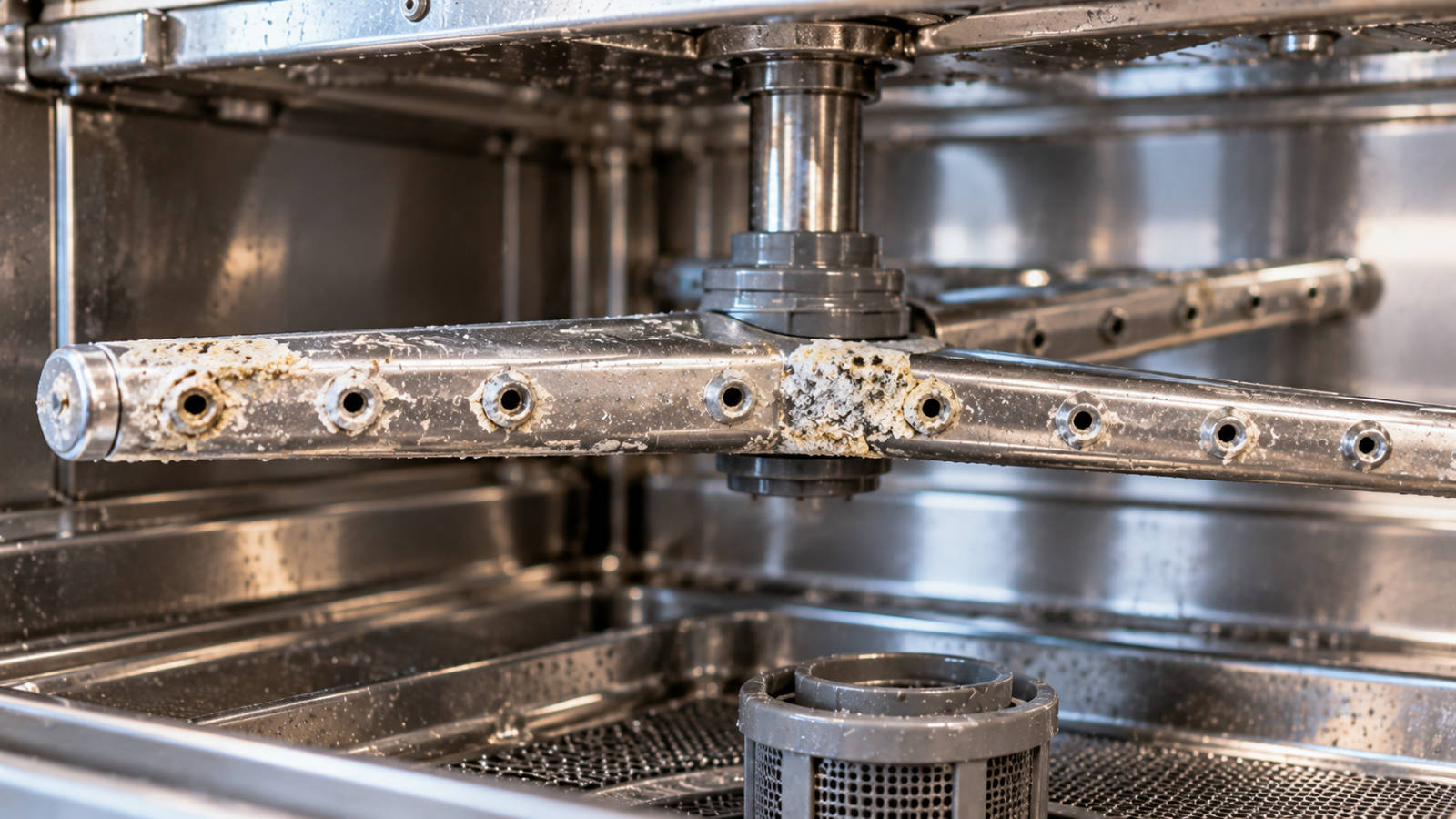
5. Blocked Spray Arms Can Prevent Proper Rinsing
Sometimes, a commercial dishwasher leaving spots has a fairly simple explanation: water isn’t reaching everything properly.
Commercial dishwashers rely on spray arms and wash systems to distribute water throughout the machine.
When spray openings become blocked by food particles, grease, or mineral deposits, cleaning and rinsing can suffer.
You may notice that some glasses come out clean while others have spots or residue.
Check accessible spray arms for visible blockages, following your manufacturer’s cleaning instructions.
Also, make sure racks are loaded correctly. Overcrowding can prevent water from reaching glassware and other items.
Regularly cleaning accessible filters and removing food debris can help prevent these problems.
If the spray arms aren’t moving correctly or water pressure seems unusually low, professional service may be needed.
6. Some Cloudy Glassware May Be Permanently Damaged
Not every cloudy glass is the result of a dishwasher problem.
Over time, glassware can develop permanent cloudiness through a process called etching.
Etching damages the glass surface and may be caused by factors such as chemical exposure, wash conditions, and repeated use.
Unlike mineral deposits, etching generally won’t wash away.
If a commercial dishwasher leaving spots continues producing cloudy glasses despite proper cleaning and rinsing, examine the glassware itself.
Try comparing an older glass with a newer one after washing.
If newer glasses come out clear while older ones remain cloudy, permanent glass damage may be contributing to the problem.
When Should You Call a Commercial Dishwasher Technician?
Some spotting problems are easy to address. Refilling rinse aid, cleaning accessible filters, and checking how racks are loaded may improve results.
However, a commercial dishwasher leaving spots after these basic checks may need professional attention.
Persistent problems can indicate incorrect chemical calibration, faulty dispensing pumps, water treatment issues, or temperature problems.
These are best handled by someone familiar with commercial dishwashing equipment.
Proper cleaning and sanitizing also matter for food safety. The BC Centre for Disease Control’s commercial dishwashing guidelines explain the importance of proper equipment operation, cleaning, and sanitizing in commercial kitchens.
If your machine isn’t meeting its required cleaning or sanitizing conditions, take it out of service until the issue is resolved.
Get Your Glassware Sparkling Clean Again
A commercial dishwasher leaving spots doesn’t always need a major repair. Sometimes, a simple adjustment or maintenance visit can make a big difference.
With more than 35 years of experience, Fluid Dishwasher helps commercial kitchens identify equipment problems and get their dishwashers working properly.
Our team can inspect chemical dispensing systems, check operating conditions, and help identify what’s causing cloudy or spotted glassware.
We also offer preventative maintenance to help catch developing problems before they interrupt your kitchen.
Tired of rewashing glasses that should already be clean? Contact Fluid Dishwasher today. We’ll help you find the cause and get your dishwasher back to doing its job.

Service & Repair Specialist