Your commercial dishwasher has one job: get those dishes clean and ready for the next round. Sounds simple enough, right?
Well, there’s a little more going on behind the scenes.
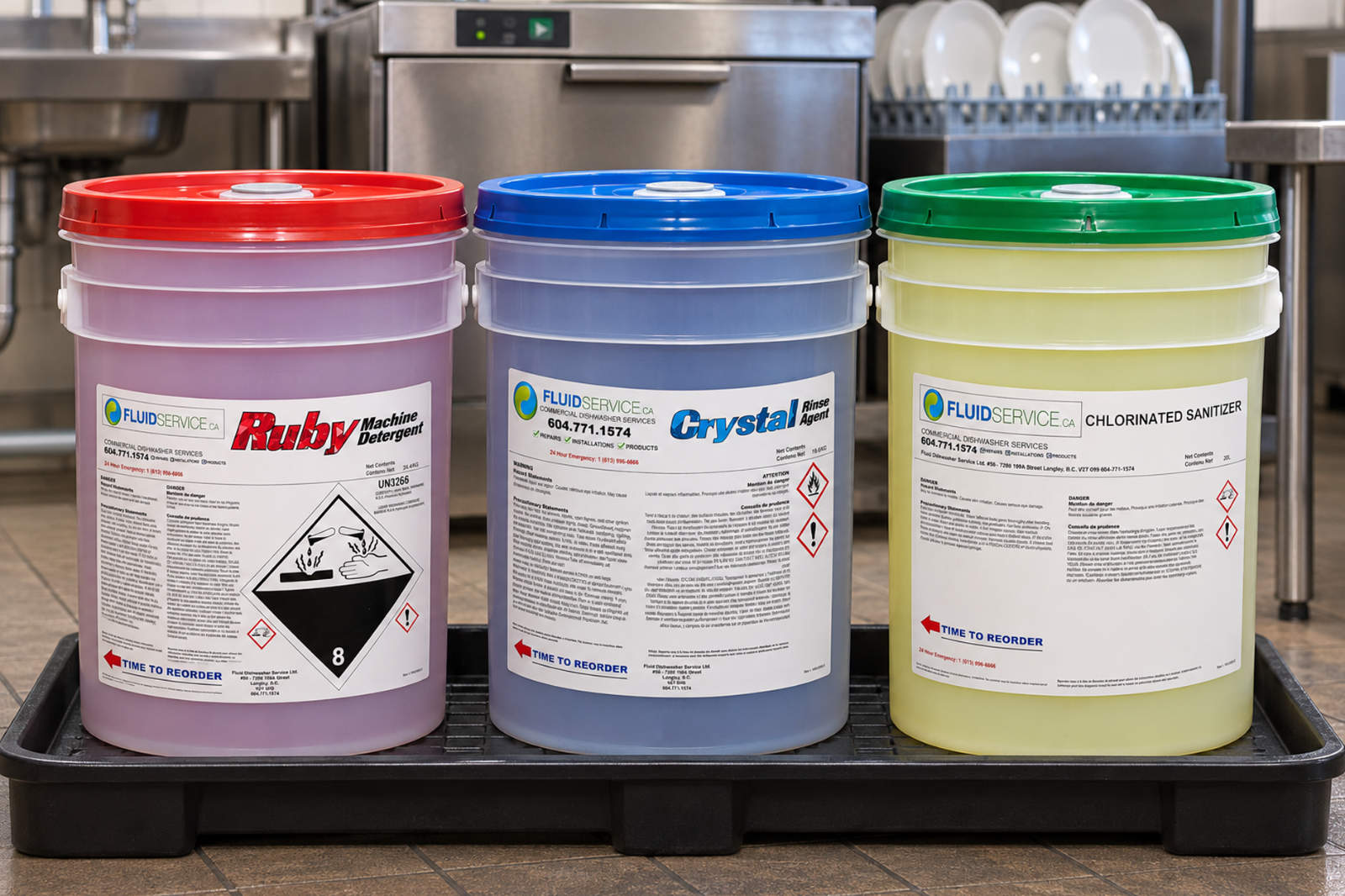
Commercial dishwasher detergent, rinse aid, and sanitizer all play a part in getting dishes clean, dry, and safe to use. But they’re not interchangeable, and using the wrong product (or the wrong amount) can leave you with greasy plates, spotty glasses, or a dishwasher that’s having a very bad day.
So, what’s the difference between these three chemicals, and does your restaurant really need all of them? Let’s get into it.
Commercial Dishwasher Detergent: The Heavy Lifter
Detergent does the dirty work. Literally.
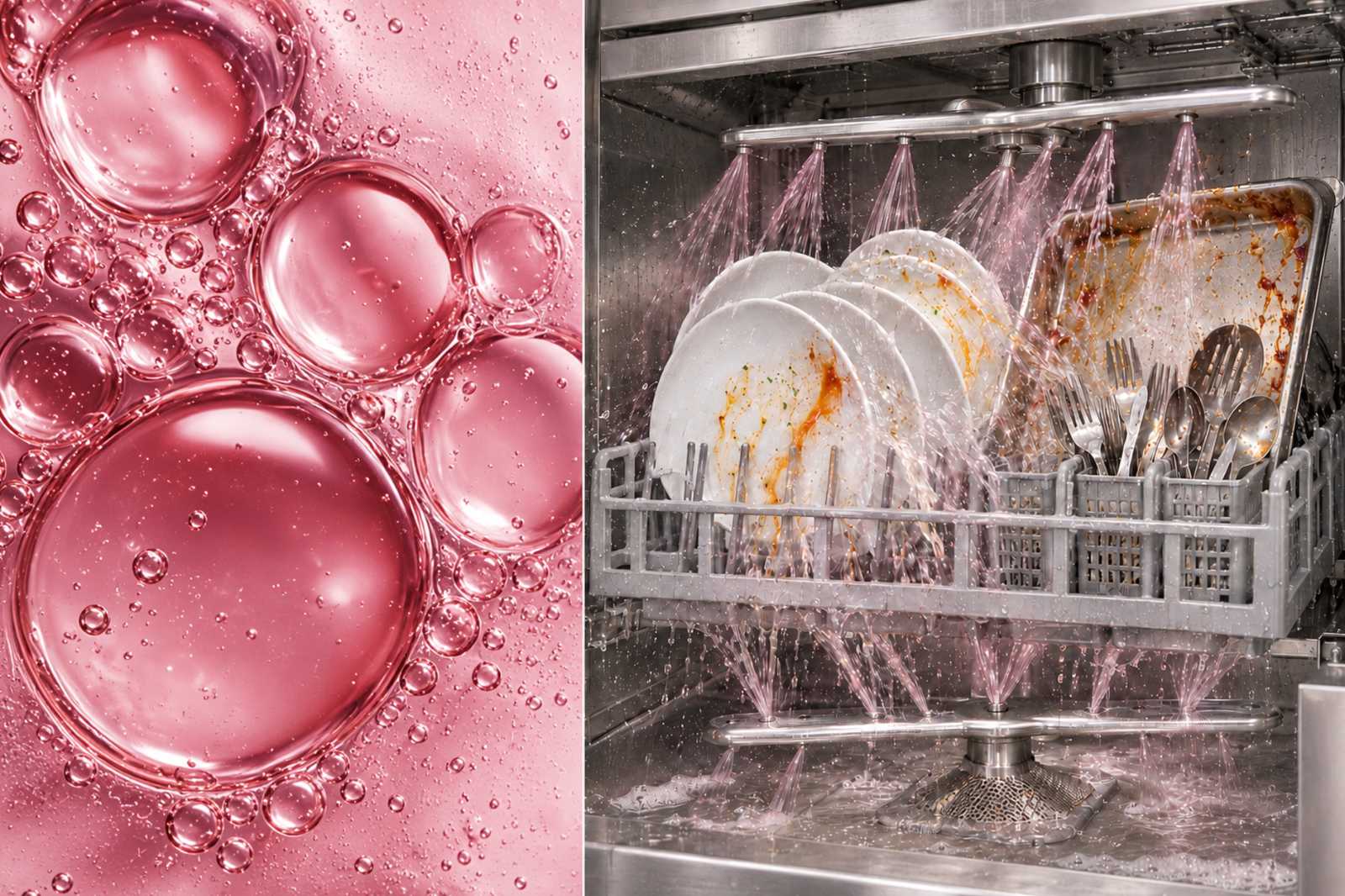
It’s responsible for breaking down grease, food residue, and all the other lovely things left behind after a busy lunch or dinner rush.
Unlike regular dish soap, commercial dishwasher soap is made for powerful machines with short wash cycles. It produces very little foam because, as fun as a kitchen full of bubbles might sound, that’s not what we’re going for.
A good detergent tackles:
- Grease and cooking oils.
- Starches and dried-on food.
- Protein residue from meat and dairy.
- Everyday grime that builds up on dishes and utensils.
The wrong detergent can leave dishes looking like they barely went through the wash. And nobody wants to explain to a customer why there’s still yesterday’s lunch on their plate.
Commercial Dishwasher Rinse Aid: Goodbye, Water Spots
Ever pull a glass out of the dishwasher and wonder why it looks worse than when it went in?
That’s where rinse aid earns its keep.
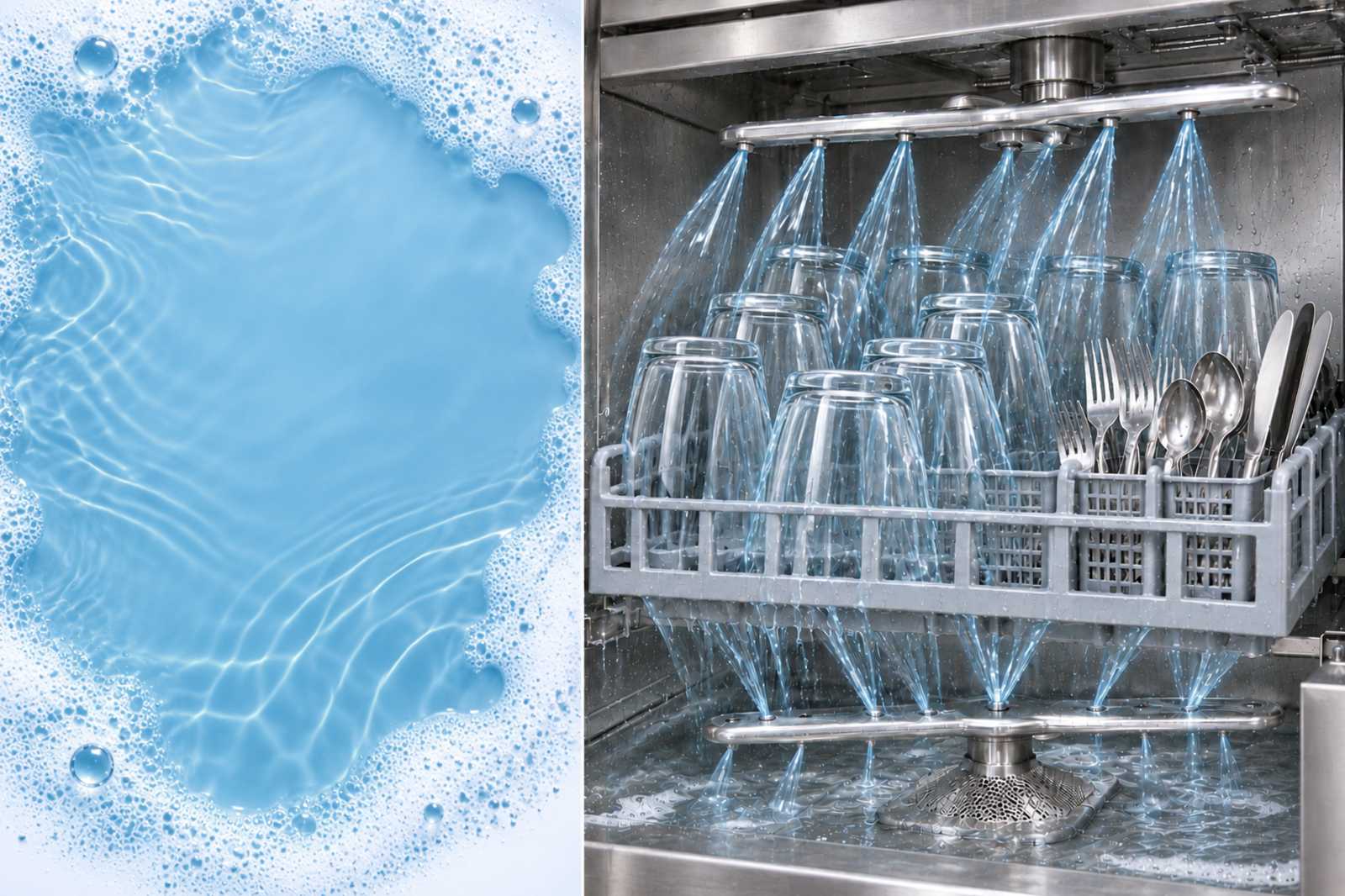
Commercial dishwasher rinse aid helps water slide off dishes and glassware instead of collecting in droplets. Fewer droplets mean fewer water spots, less streaking, and faster drying.
It’s especially handy for restaurants that go through mountains of glasses and cutlery every day.
But here’s the catch: rinse aid doesn’t actually clean anything. It won’t remove grease, scrub away food, or sanitize your dishes.
Think of it as the finishing touch. Detergent handles the mess, and rinse aid helps everything come out looking presentable.
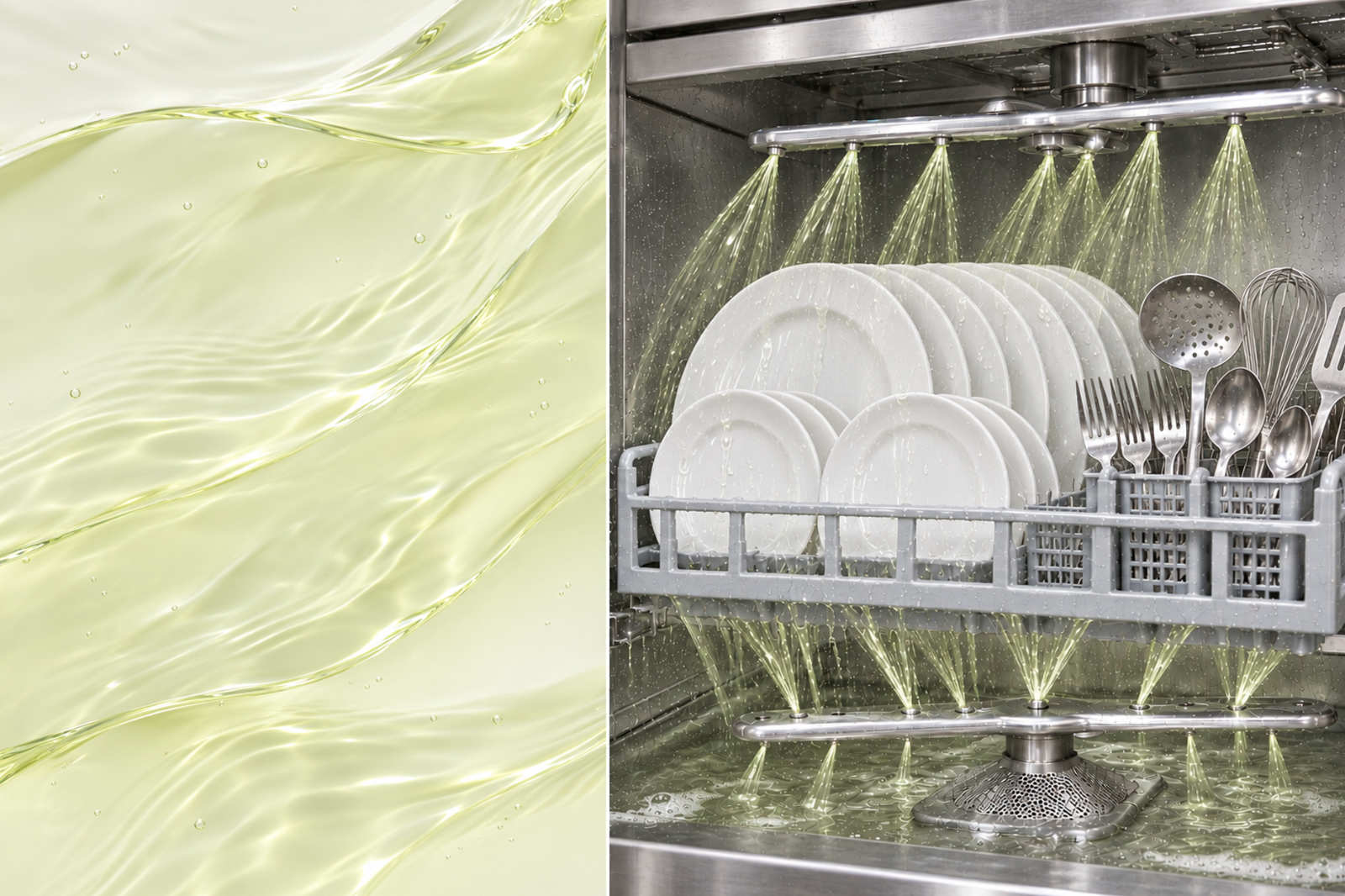
Commercial Dishwasher Sanitizer: The Food Safety Guy
A plate can look perfectly clean and still have unwanted microorganisms hanging around.
Not exactly the kind of guests you want at your restaurant.
That’s where sanitizing comes in.
Commercial dishwashers generally use one of two methods:
High-temperature sanitizing: These machines use very hot water during the final rinse to sanitize dishes. They typically don’t need a separate chemical sanitizer.
Low-temperature sanitizing: These machines rely on an approved chemical sanitizer, often chlorine-based, to get the job done.
If your machine uses a commercial dishwasher sanitizer, the concentration matters. Too little may not sanitize properly, while too much can leave unwanted chemical residue.
The FDA Food Code provides guidance on cleaning and sanitizing food-contact surfaces. Your local health regulations and the sanitizer manufacturer’s instructions should always guide how your equipment is used.
Can You Swap One Chemical for Another?
Short answer? Nope.
Longer answer? Still nope, but here’s why.
Each chemical has a specific job. Detergent removes food and grease. Rinse aid helps dishes dry without spots. Sanitizer reduces harmful microorganisms.
Adding more detergent won’t make up for missing sanitizer. And dumping in extra rinse aid isn’t going to magically remove that stubborn layer of grease.
Your commercial dishwasher detergent and rinse aid also need to work with your particular machine and dispensing system.
The right products, in the right amounts, at the right time. That’s how you get consistently clean dishes without wasting chemicals.
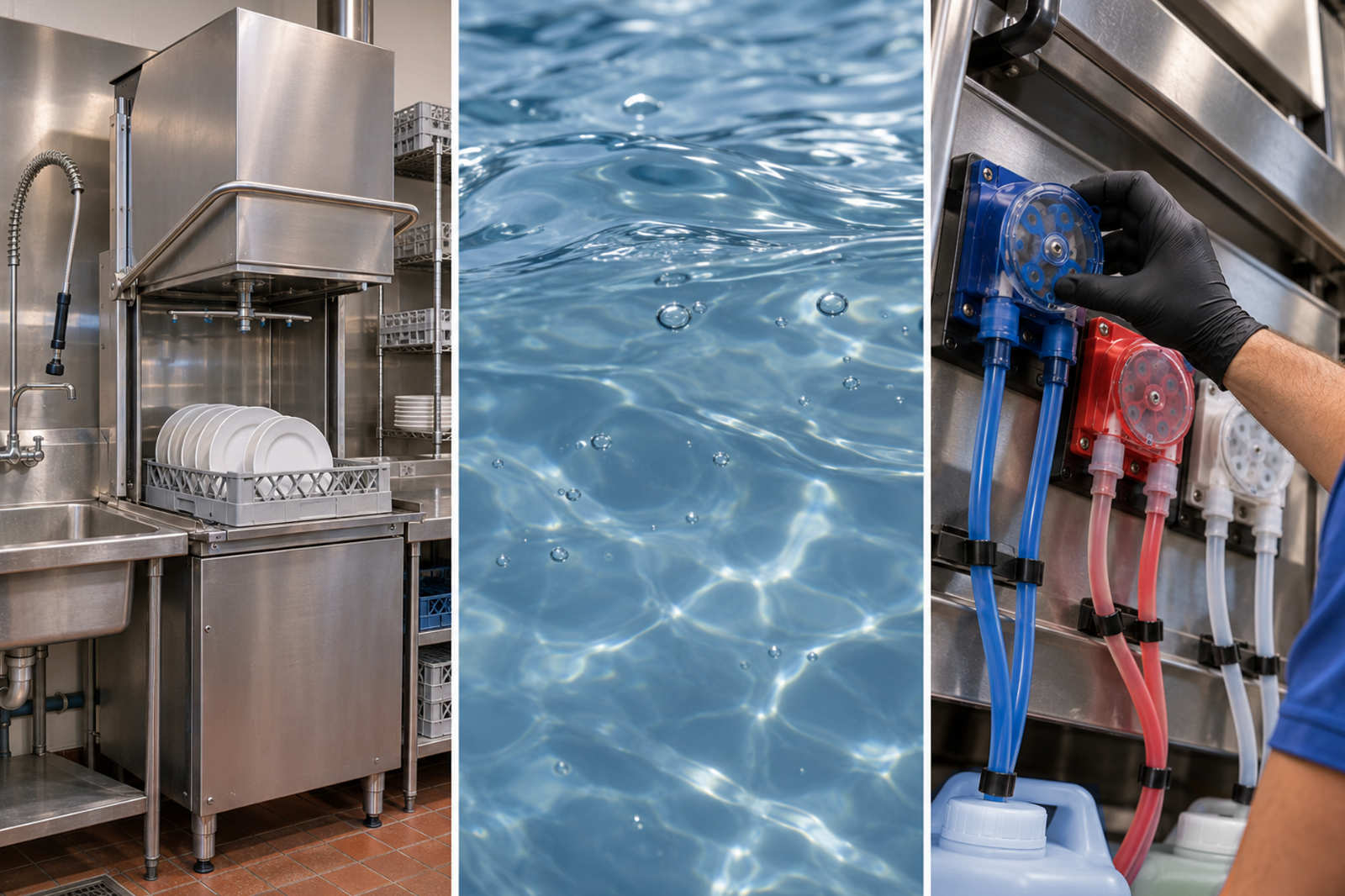
How Do You Know Which Dishwasher Chemicals You Need?
Not every restaurant needs the same setup. What works beautifully in one kitchen might be completely wrong for another.
A few things make a difference.
Your Dishwasher Type
High-temperature and low-temperature machines have different sanitizing requirements. Before choosing chemicals, make sure they’re approved for your equipment.
Your Water Quality
Hard water can be a real pain. Minerals in the water can leave cloudy glassware, stubborn spots, and scale buildup inside your machine.
Depending on your water conditions, you might need a hard-water detergent, adjusted rinse aid, or a water treatment system.
Your Chemical Dosing
Here’s something we see more often than you’d think: perfectly good chemicals that aren’t being dispensed properly.
Too little detergent? Dirty dishes.
Too much rinse aid? Unnecessary chemical waste and potentially poor results.
Incorrect sanitizer concentration? That’s a food safety concern.
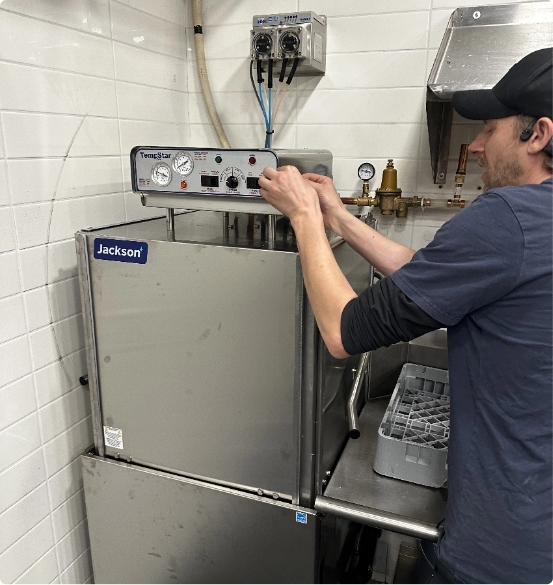
Regular chemical dispenser checks and calibration help prevent these headaches. Fluid Dishwasher’s chemical supply and system setup services can help make sure your chemicals and equipment are playing nicely together.
A Good Chemical Supplier Does More Than Drop Off Jugs
There’s more to choosing between commercial dishwasher detergent suppliers than finding the cheapest bucket of soap.
A good supplier understands your equipment, your water conditions, and what your kitchen goes through on a typical day.
They should be able to recommend compatible products, check your chemical dispensing system, and help you avoid wasting money on products you’re using too much of.
Because buying chemicals shouldn’t be a guessing game. And neither should figuring out why your dishes aren’t coming clean.
Let’s Get Those Dishes Looking Good Again
At Fluid Dishwasher, we’ve seen our fair share of cloudy glasses, greasy plates, and chemical dispensers that have decided to do their own thing.
The good news? Most chemical-related cleaning problems have a reason behind them, and we’re pretty good at finding it.
Whether you need help choosing the right restaurant dishwasher chemicals, adjusting your dispensing system, or figuring out why your dishes aren’t coming out clean, we’ve got you covered.
Contact Fluid Dishwasher today and let’s get your dishwasher doing what it’s supposed to do. Without the drama.

Service & Repair Specialist