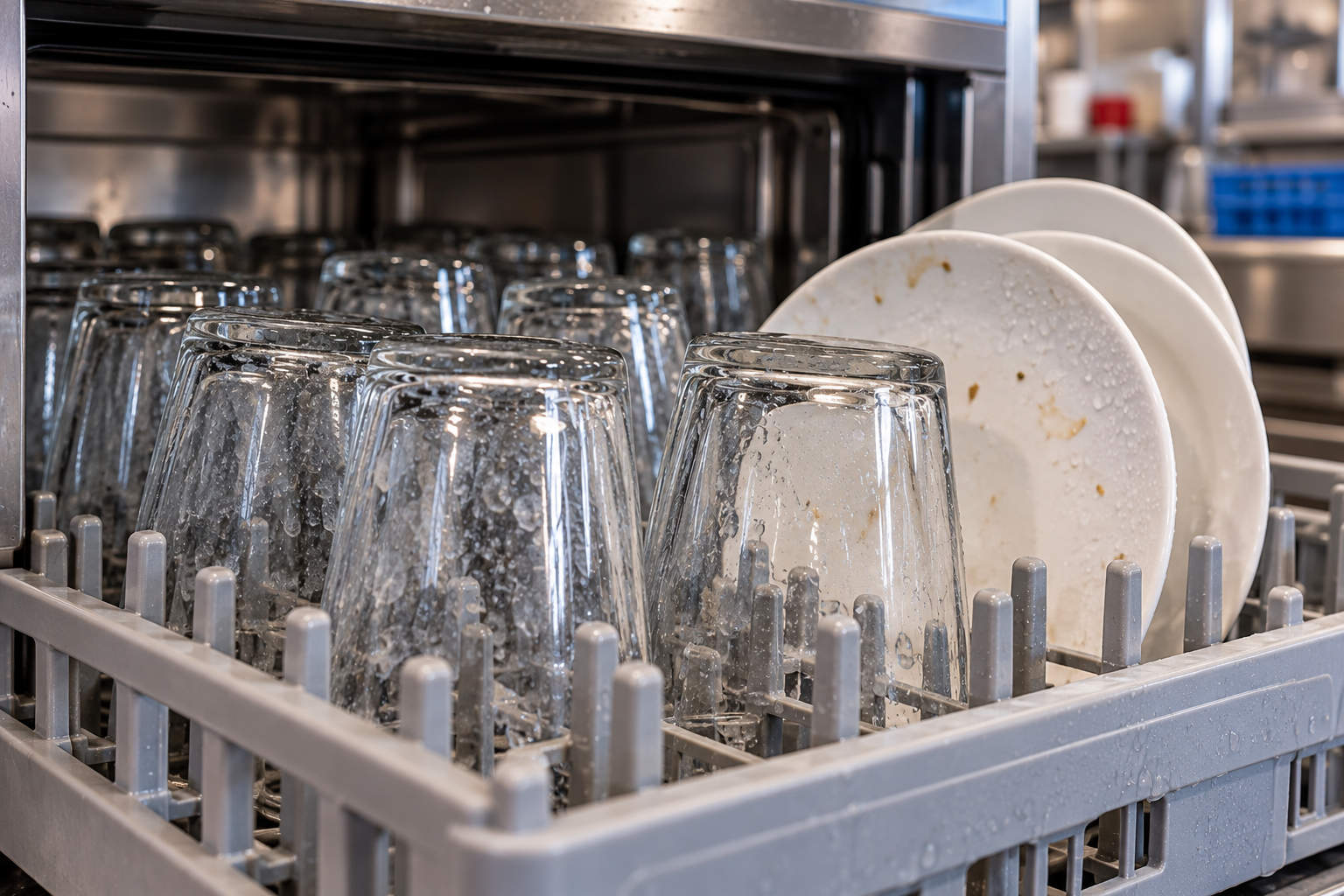
Your commercial dishwasher might be running through its cycles just fine, but are your dishes actually coming out clean?
If you’re noticing cloudy glasses, greasy plates, water spots, or dishes that need to be washed twice, the problem might not be the dishwasher itself. It could be the chemical dispensing system.
A commercial dishwasher chemical dispenser plays an important role in keeping your kitchen running smoothly. It delivers the right amount of detergent, rinse aid, or sanitizer at the right time during the wash cycle. When something interrupts that process, cleaning results can suffer, even if the dishwasher seems to be working normally.
Let’s look at what can go wrong, what you can safely check, and when it’s time to bring in a professional.
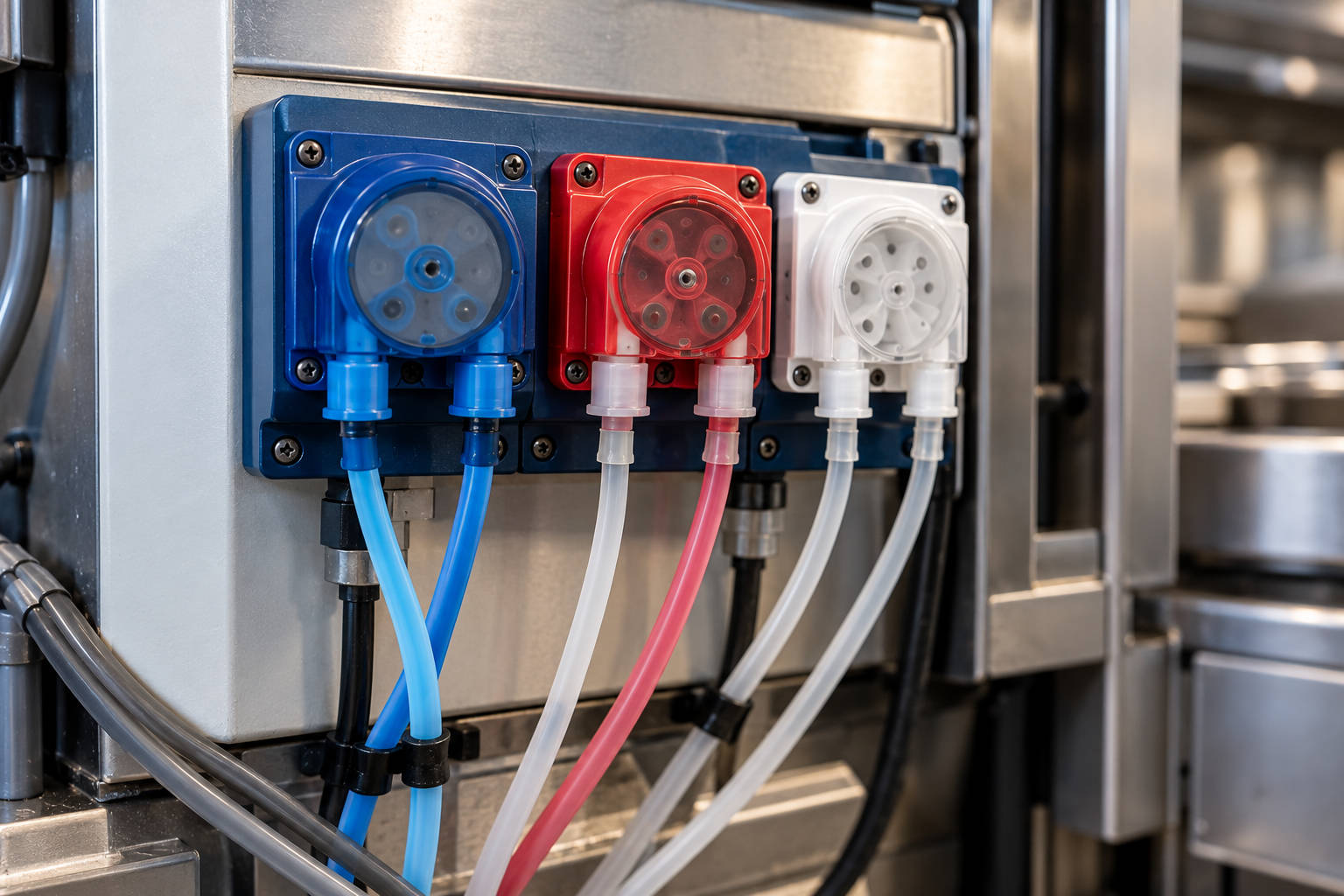
How Does a Commercial Dishwasher Chemical Dispenser Work?
Commercial dishwashers rely on carefully measured amounts of cleaning chemicals to get consistent results.
Detergent helps break down grease and food residue. Rinse aid helps water drain off dishes and glassware, reducing spots and streaks. In low-temperature dishwashers that use chemical sanitizing, sanitizer helps reduce harmful microorganisms to the required levels.
A dishwasher chemical system typically uses pumps, tubing, and electronic controls to deliver these products during specific parts of the wash cycle.
When everything is working properly, the process is automatic. But if a pump stops working, a line becomes blocked, or the settings are incorrect, the machine may not receive enough chemicals to do its job.
1. Blocked or Damaged Chemical Tubing
One of the most common commercial dishwasher chemical dispenser problems involves the tubing that carries chemicals from their containers to the machine.
Over time, chemical residue can build up inside the tubing, restricting the flow. Tubes can also become kinked, cracked, or damaged.
When that happens, the dispenser may struggle to deliver the correct amount of detergent, rinse aid, or sanitizer.
You might notice that dishes aren’t getting as clean as they used to, or that the chemical levels in the containers barely seem to change.
A quick visual inspection can sometimes reveal a kinked tube, a loose connection, or obvious damage. However, chemical lines should only be cleaned or replaced by someone trained to handle the products and equipment safely.
2. Air Trapped in the Chemical Lines
Sometimes the problem isn’t a blockage. It’s air.
If a chemical container runs empty or a supply tube loses its prime, air can enter the line and interrupt the flow of chemicals.
The pump may continue operating, but instead of pulling detergent or sanitizer into the machine, it struggles to move the air through the tubing.
This is especially common after changing chemical containers.
Some dispensing systems have a priming function that helps restore the flow. The correct procedure depends on the equipment, so always follow the manufacturer’s instructions or have a service technician handle it.
3. Worn or Failing Chemical Pumps
Chemical dispenser pumps work hard, often running through hundreds of cycles in a busy commercial kitchen.
Like any mechanical component, they wear down over time.
A commercial dishwasher detergent pump not working properly may still make noise or appear to operate, even though it isn’t delivering the right amount of chemical.
Worn pump tubing, damaged rollers, electrical problems, and failing motors can all affect performance.
If your commercial dishwasher is not pulling detergent despite having a full container and clear supply lines, the pump may need professional attention.
Replacing a worn component or repairing the pump can often restore proper chemical delivery without replacing the entire dispensing system.
4. Empty Containers or Incorrect Chemical Connections
Sometimes the explanation is surprisingly simple.
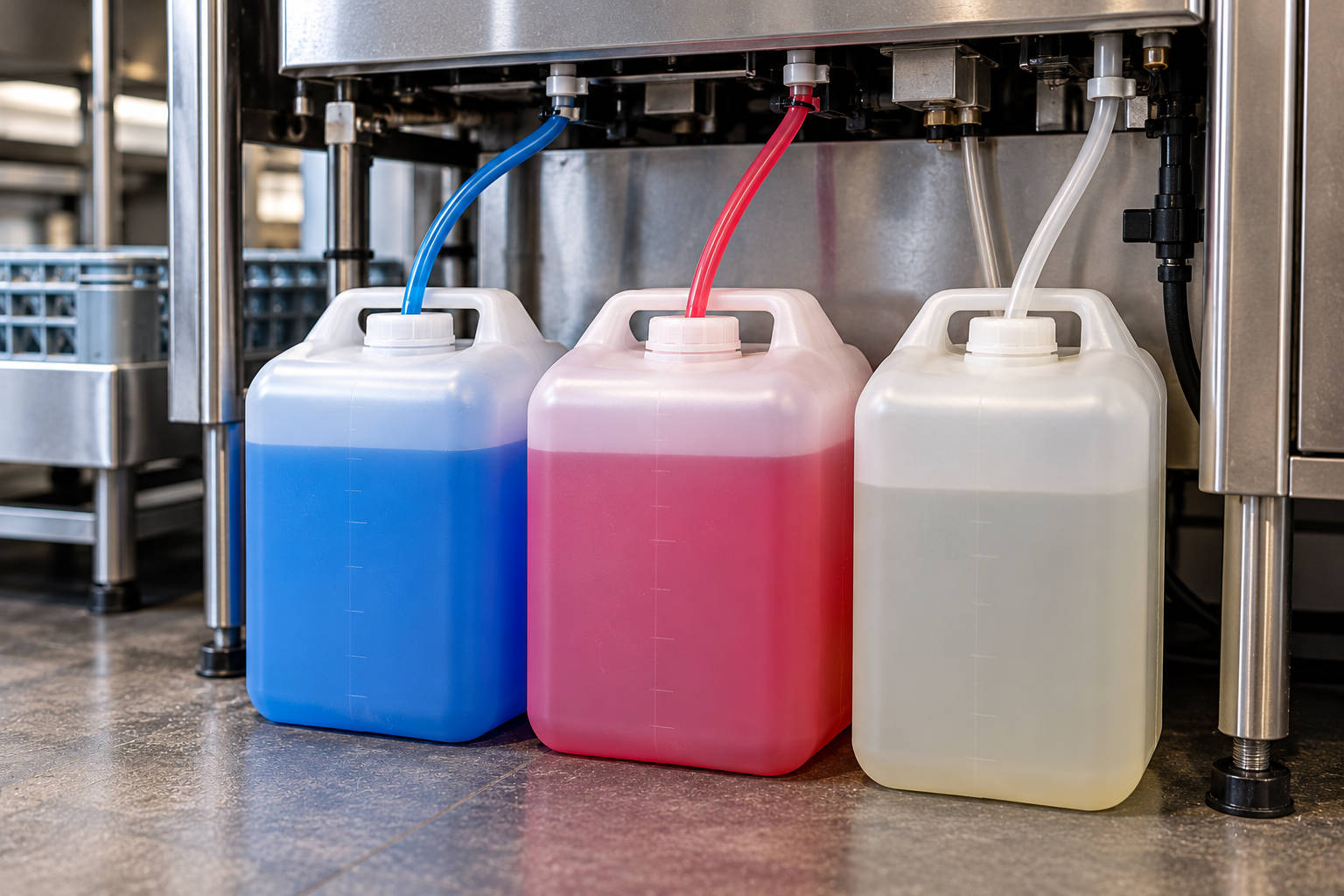
A chemical container may be empty, the pickup tube may not reach the remaining liquid, or a connection may have come loose.
These are good places to start when you’re troubleshooting inconsistent cleaning results.
Check whether the chemical containers have enough product and whether the supply tubes appear securely connected.
It’s also important to make sure each chemical is connected to its designated dispensing line. Detergent, rinse aid, and sanitizer are designed for different purposes and should never be mixed or transferred between systems.
If you’re unsure about a connection, leave it alone and ask your chemical supplier or service technician to check it.
5. Incorrect Dispenser Settings
Even when the tubing and pumps are working perfectly, the dishwasher may still deliver too much or too little chemical.
That’s where dispenser settings come in.
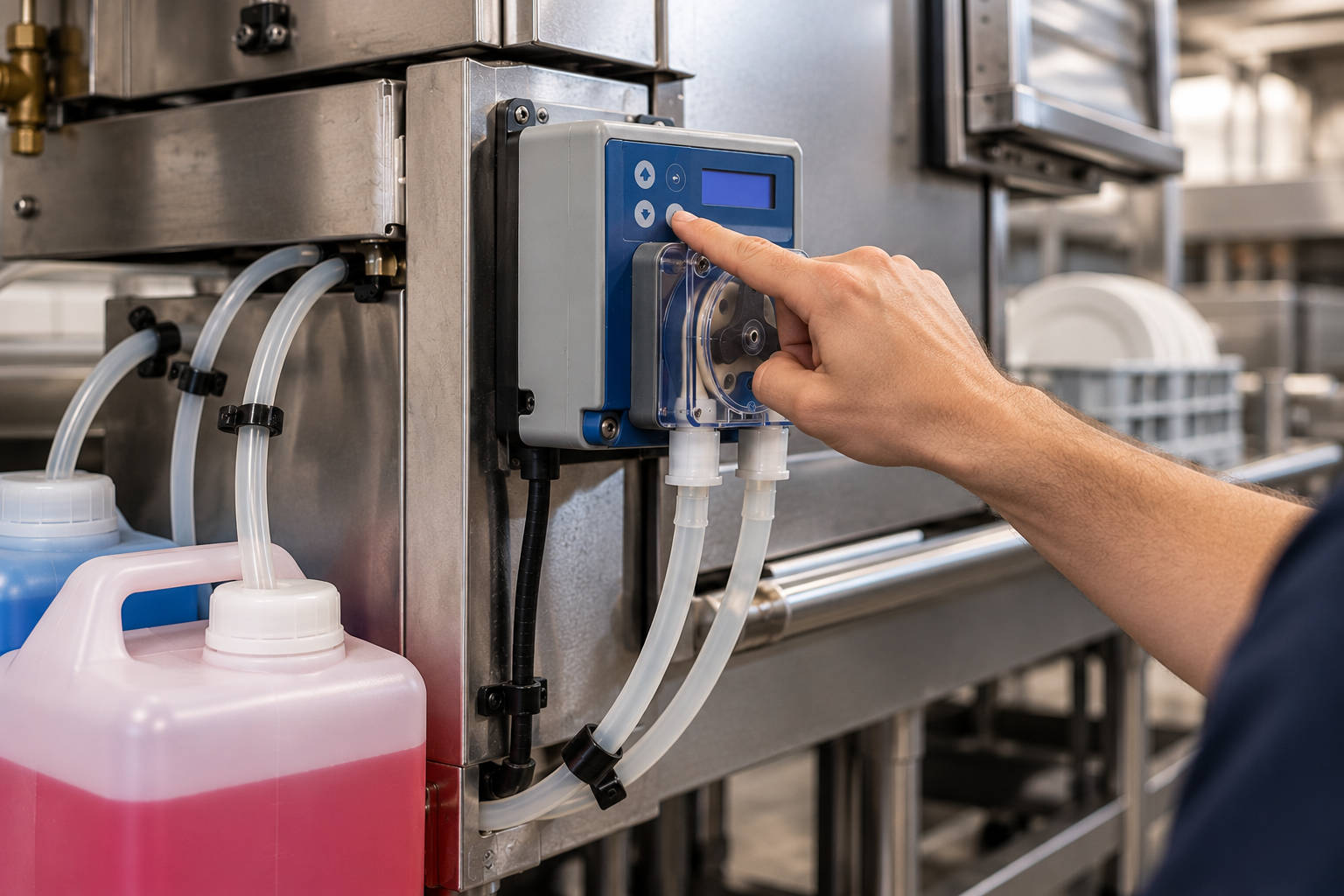
Commercial dishwasher chemical calibration helps ensure the correct amount of each product enters the machine during the appropriate cycle.
The proper settings depend on several factors, including the dishwasher model, chemical concentration, water conditions, and the manufacturer’s recommendations.
Too little detergent can leave food residue and grease behind. Too much can create unnecessary chemical waste or leave residue on dishes.
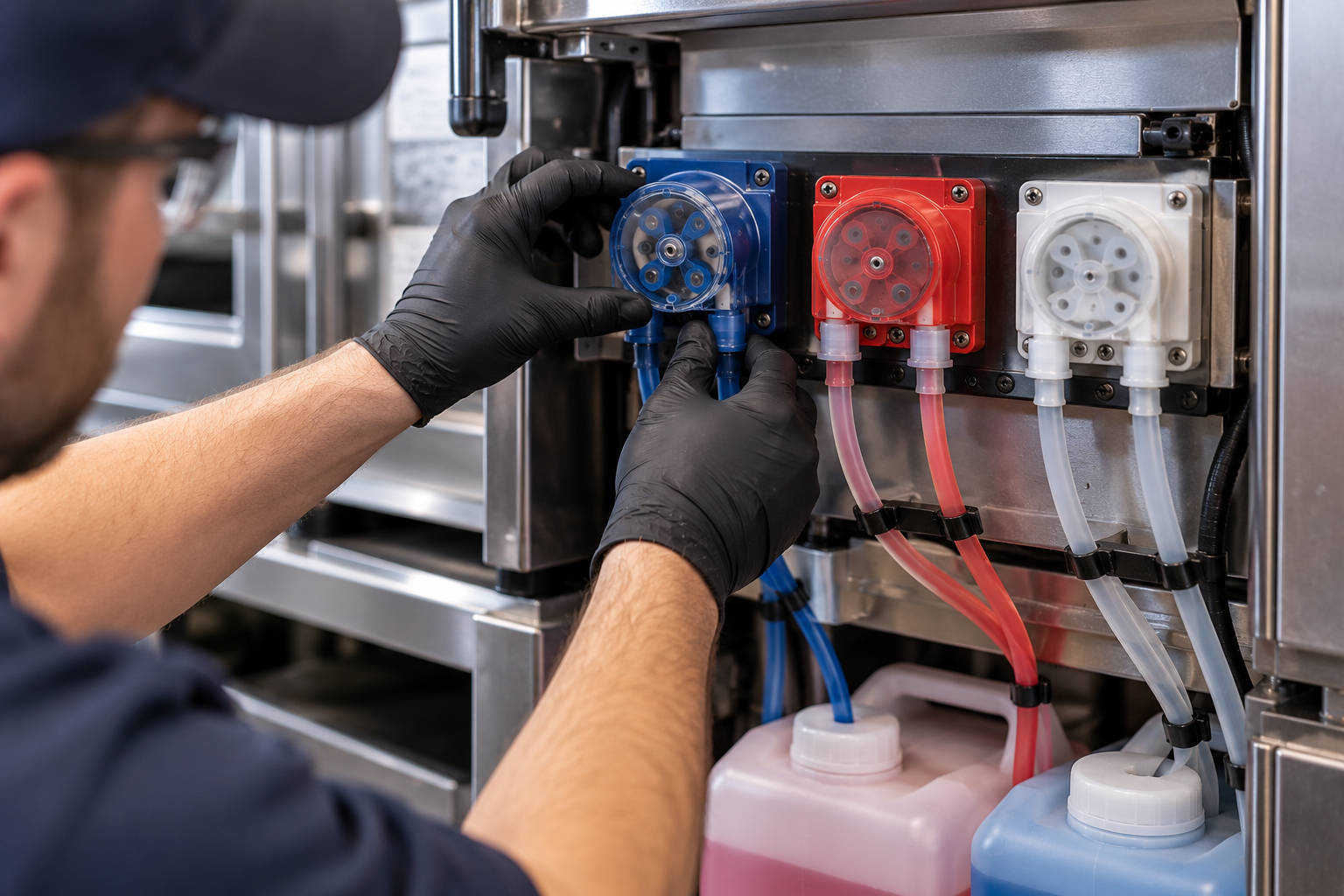
A qualified technician can check the dispensing rates and adjust the settings to help the machine operate as intended.
6. Poor Calibration and Inconsistent Chemical Delivery
Chemical dispensing isn’t something you can simply set once and forget about forever.
Pumps wear, chemical products change, and operating conditions can shift over time.
Even small changes in delivery rates can affect wash quality.
If your kitchen has started experiencing cloudy glassware, inconsistent cleaning, or sanitizer concentration readings outside the required range, your commercial dishwasher chemical dispenser may need recalibration.
Regular checks help catch these problems before they become bigger headaches.
For kitchens using chemical sanitizers, it’s especially important to verify sanitizer concentration with the appropriate test method and follow the equipment manufacturer’s instructions and applicable local health requirements.
Why Chemical Dispenser Problems Matter
Poor chemical delivery isn’t just frustrating. It can affect several parts of your kitchen’s daily operations.
Dishes may need additional washing, which uses more water, energy, and staff time. Excess chemicals can increase operating costs, while insufficient detergent can affect cleaning performance.
For low-temperature machines, inadequate sanitizer delivery can also create food safety concerns.
That’s why a commercial dishwasher chemical dispenser should be included in regular equipment inspections and maintenance.
Catching a small problem early can help prevent unnecessary downtime and keep your kitchen running efficiently.
When Should You Call for Commercial Dishwasher Repair?
Checking chemical levels and looking for visible tubing damage are reasonable first steps.
However, if the dispenser continues to feed inconsistently, the pump isn’t working, or the system needs calibration, it’s time to call a professional.
Chemical dispensing systems involve concentrated cleaning products, electrical components, and settings that need to be measured accurately. Repairs and adjustments are best handled by trained technicians.
At Fluid Dishwasher Service, we’ve spent more than 35 years helping commercial kitchens throughout the Vancouver area keep their dishwashing equipment working reliably.
We understand how important consistent cleaning results are when your kitchen is busy, and we’re here to help identify problems and get your equipment back on track.
Keep Your Dishwasher Working the Way It Should
A chemical dispensing problem doesn’t always mean you need a major repair. Sometimes it’s a worn tube, a pump that needs attention, or a system that needs proper calibration.
The important thing is finding the cause and getting it corrected before it affects your kitchen’s workflow.
Whether you’re dealing with inconsistent chemical feeding, poor wash results, or a dispenser that has stopped working altogether, Fluid Dishwasher Service can help.
Contact Fluid Dishwasher Service today to schedule a service visit and keep your commercial dishwasher running reliably.

Service & Repair Specialist