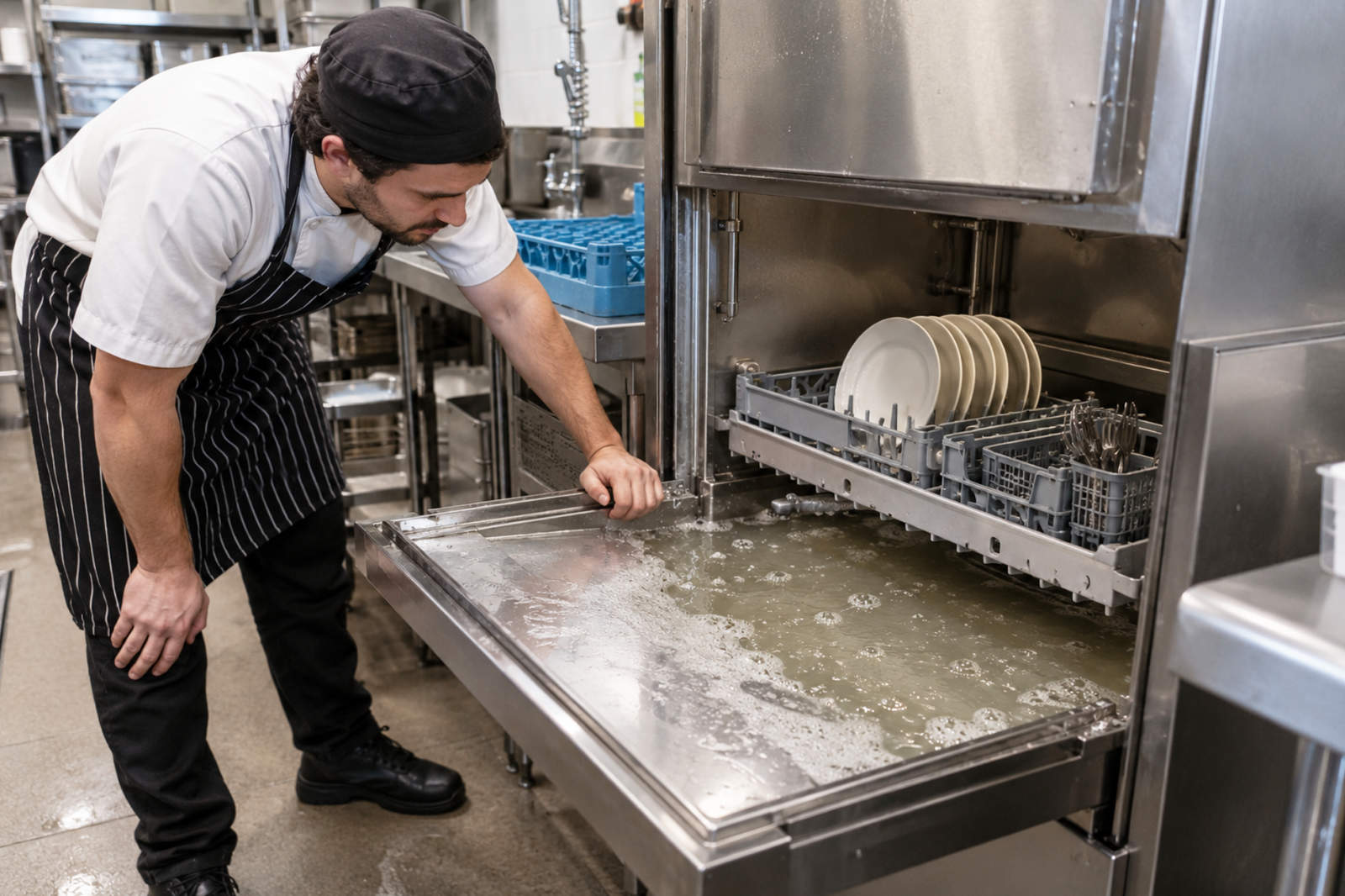
When your commercial dishwasher finishes a cycle, you expect the dirty water to disappear. If you open the machine and find water sitting in the bottom, something clearly did not go according to plan.
A commercial dishwasher not draining can be caused by something fairly simple, such as a clogged filter. It can also point to a problem with the drain pump, valves, controls, or another part of the machine.
Either way, it is not something you want to ignore. Standing water can affect cleaning and sanitizing, create unpleasant smells, and eventually bring your dishwashing operation to a stop.
The good news is that there are a few things your staff can safely check before calling for commercial dishwasher repair.
Start With the Filter
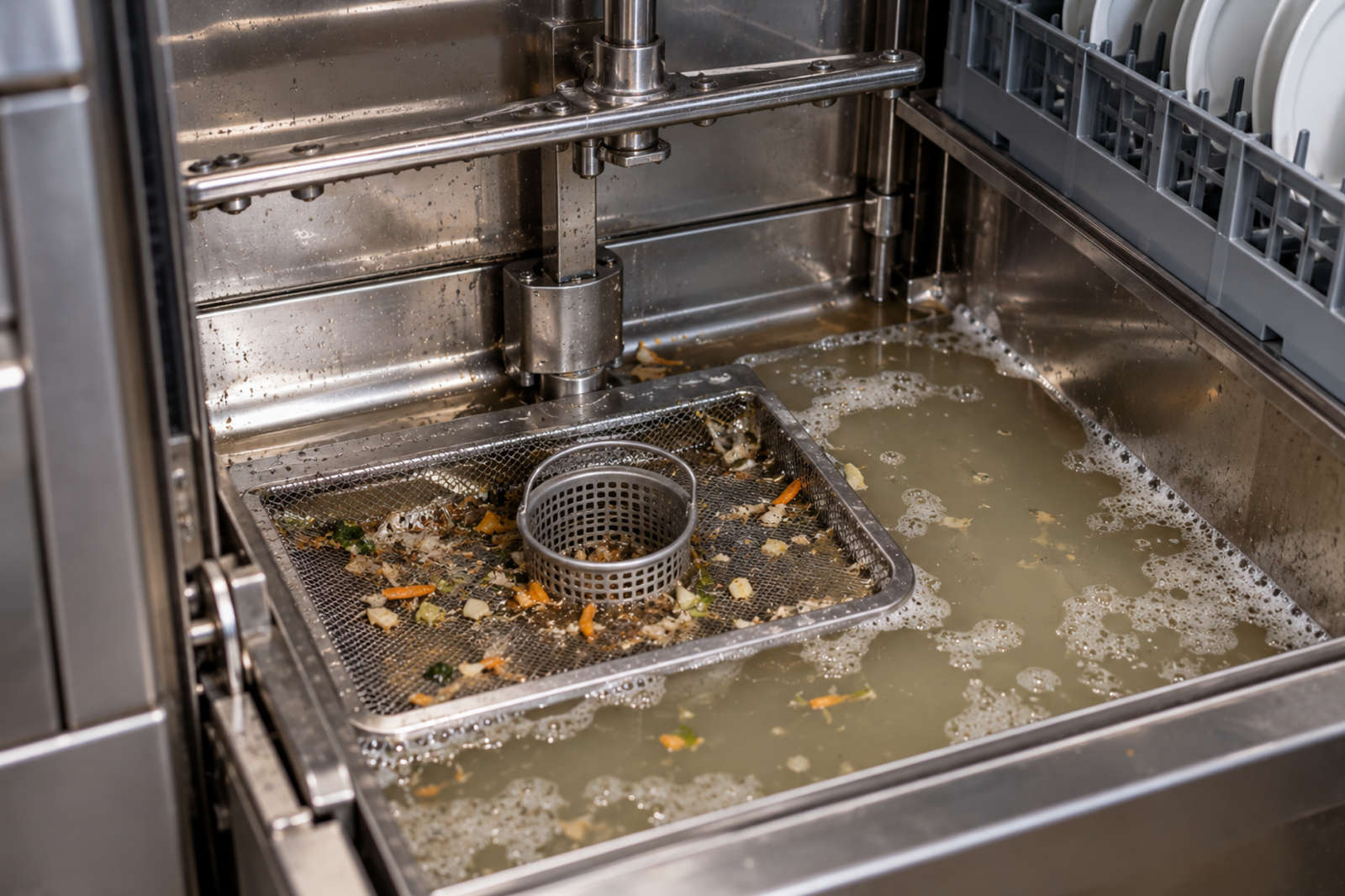
If you have a commercial dishwasher not draining properly, the filter is a good place to start.
Commercial dishwashers deal with a lot of food debris. Even when dishes are scraped before loading, bits of food, labels, napkins, straws, and other debris can find their way into the machine.
The filter is designed to catch much of that material before it enters other parts of the dishwasher. When the filter becomes clogged, water may drain slowly or stop draining altogether.
Turn the machine off and follow the manufacturer’s instructions for removing and cleaning the filter. If there is a lot of debris, cleaning it may solve the problem.
This is also one reason regular cleaning matters. A few minutes spent checking filters each day can help prevent a much bigger headache during a busy shift.
Check for an Obvious Blockage
Sometimes the problem is farther down the line.
A blocked or kinked drain hose can prevent water from leaving the dishwasher properly. Food debris, grease, and other buildup can also create blockages in drain lines over time.
Staff can usually check for obvious problems around accessible hoses and drains. Look for a hose that has been pinched, moved, or bent. You can also check accessible drain areas for visible debris.
Be careful about going any farther than that. Commercial dishwashers combine electricity, hot water, chemicals, and moving parts. Taking the machine apart to investigate a blockage is better left to a trained technician.
The Drain Pump May Be the Problem
If the filter and accessible drain areas look clear, the problem may be mechanical.
The drain pump moves wastewater out of the dishwasher. If it becomes clogged, damaged, or fails completely, you may end up with water sitting in the machine after a cycle.
You might also notice unusual noises while the dishwasher is trying to drain. In other cases, you may hear the machine running normally but see little or no water leaving it.
A faulty pump is not usually a staff troubleshooting job. If you suspect the pump is behind your commercial dishwasher not draining, it is time to bring in a technician who can safely inspect and test it.
A Valve Could Be Stuck or Damaged
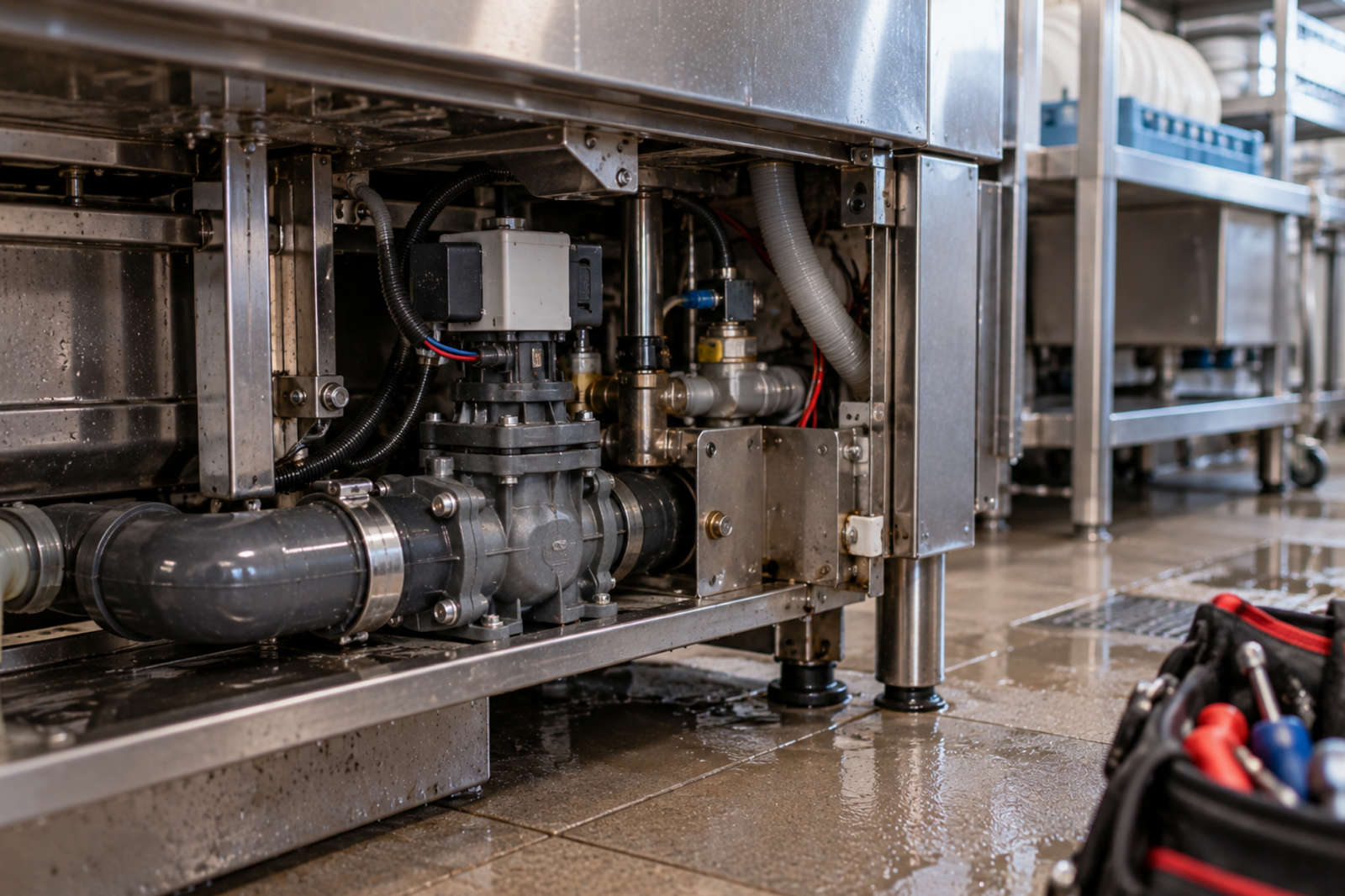
Commercial dishwashers use valves to control water as it moves through the machine. If a drain valve becomes stuck, clogged, or damaged, wastewater may not be able to leave when it should.
Valve problems can be difficult to identify without opening the machine and testing its components. They can also look a lot like other commercial dishwasher drain problems.
That is where professional troubleshooting saves time. Instead of replacing parts based on a guess, a technician can determine what is actually preventing the machine from draining.
It Could Be an Electrical or Control Problem
Not every drainage problem is caused by something physically blocking the water.
Modern commercial dishwashers rely on timers, switches, sensors, control boards, and other electrical components to tell the machine what to do and when to do it.
If the dishwasher never tells the drain pump to turn on, for example, the pump itself might be perfectly fine.
This is one reason diagnosing a commercial dishwasher not draining is not always as simple as clearing a clog. When the obvious causes have been ruled out, the problem may require electrical testing or a closer look at the machine’s controls.
What Can Your Staff Safely Check?
There is a difference between basic commercial dishwasher troubleshooting and taking a machine apart.
Your staff can check whether the filter needs cleaning, look for visible debris, make sure accessible drain areas are clear, and check that a drain hose has not been obviously kinked or moved.
It is also worth paying attention to what the dishwasher is doing. Is it making an unusual sound? Did the problem start suddenly? Is it draining slowly or not at all? Are there error codes on the display?
Those details can help a repair technician narrow down the problem faster.
If basic cleaning does not fix the issue, do not keep running the machine and hoping it sorts itself out. Continuing to operate a dishwasher with a drainage problem can lead to additional problems and more downtime.
When Should You Call for Commercial Dishwasher Repair?
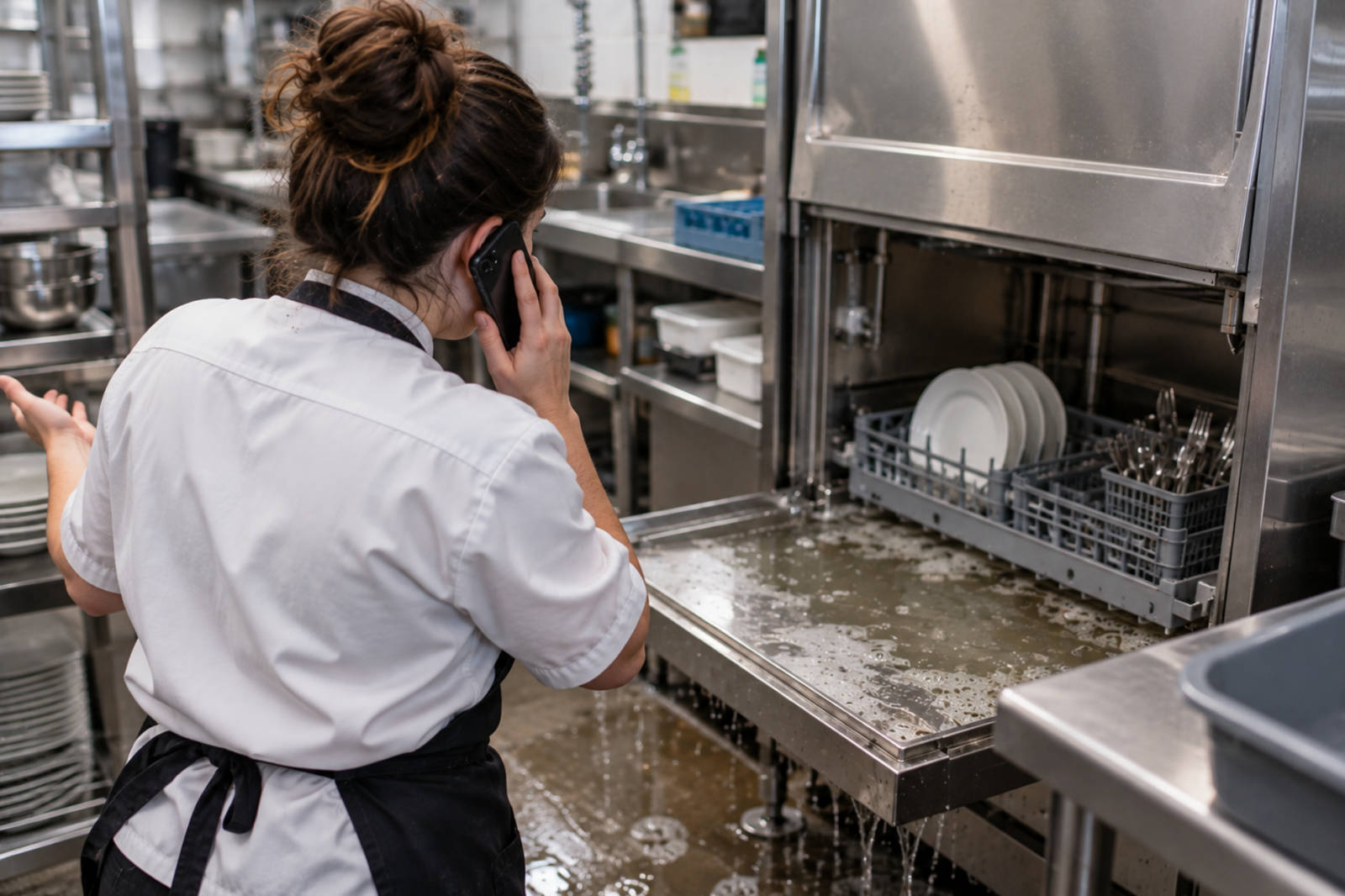
If you have cleaned the filter, checked the obvious drain areas, and still have a commercial dishwasher not draining, it is probably time for professional help.
You should also call for repair if the machine is leaking, repeatedly backing up, displaying an error code, making unusual sounds, or shutting down during a cycle.
For restaurants and other commercial kitchens, timing matters. A dishwasher that is partly working at 10 a.m. can become a dishwasher that is completely down in the middle of the lunch rush.
Getting a developing problem checked early may help you avoid a much bigger disruption.
Preventing Future Drain Problems
Not every breakdown can be prevented, but regular maintenance can make a big difference.
Cleaning filters, scraping dishes properly, watching for unusual performance, and keeping up with routine commercial dishwasher maintenance can help catch small problems before they turn into emergency repairs.
Regular professional maintenance also gives a technician the chance to look at components your staff cannot safely inspect themselves.
If you keep seeing the same drain problem over and over, that is especially worth investigating. The clog or standing water may be the symptom rather than the actual cause.
Commercial Dishwasher Not Draining? Fluid Can Help
When your dishwasher stops draining, you need to know what is wrong and what it will take to get your kitchen moving again.
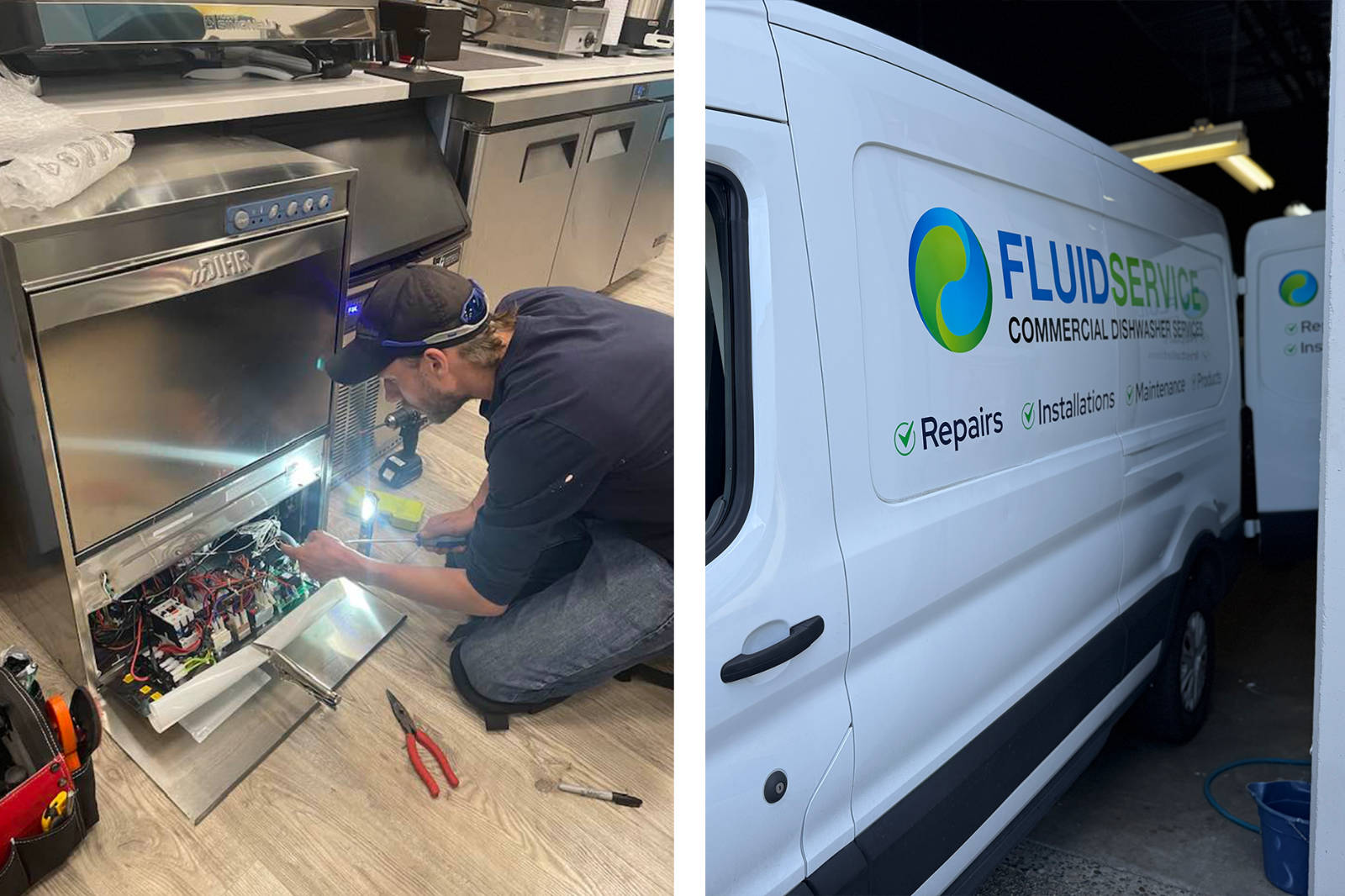
Fluid Dishwasher Service has decades of experience working with commercial dishwashers in restaurants and commercial kitchens. We can troubleshoot drainage problems, identify the cause, and help you decide on the right repair.
Dealing with a commercial dishwasher that won’t drain? Contact Fluid Dishwasher Service and let’s get it sorted out before it turns into a bigger problem.

Service & Repair Specialist