A commercial dishwasher can leave plates looking perfectly clean while still failing to sanitize them properly. Unfortunately, “looks clean enough” does not carry much weight with a health inspector.
If your commercial dishwasher is not sanitizing, the problem may be related to temperature, chemical concentration, water flow, or something as simple as how the machine is being loaded. Here are seven things to check before your next service call.
1. Check the Final Rinse Temperature
High-temperature commercial dishwashers use hot water during the final rinse to sanitize dishes. If the water does not reach the required temperature, the dishes may be clean, but they have not completed the sanitizing process.
Start by checking the temperature gauge during the final rinse cycle. The required temperature will depend on the machine and local health regulations, so refer to the manufacturer’s instructions for your specific model.
If the temperature is too low, the problem could be related to the booster heater, heating element, thermostat, or incoming water temperature. It can also happen when the machine is run continuously without enough time for the water to recover between loads.
When a commercial dishwasher is not sanitizing because of low temperatures, repeatedly running the same dishes through the machine will not solve the underlying problem. It will mostly create wetter dishes and increasingly annoyed kitchen staff.
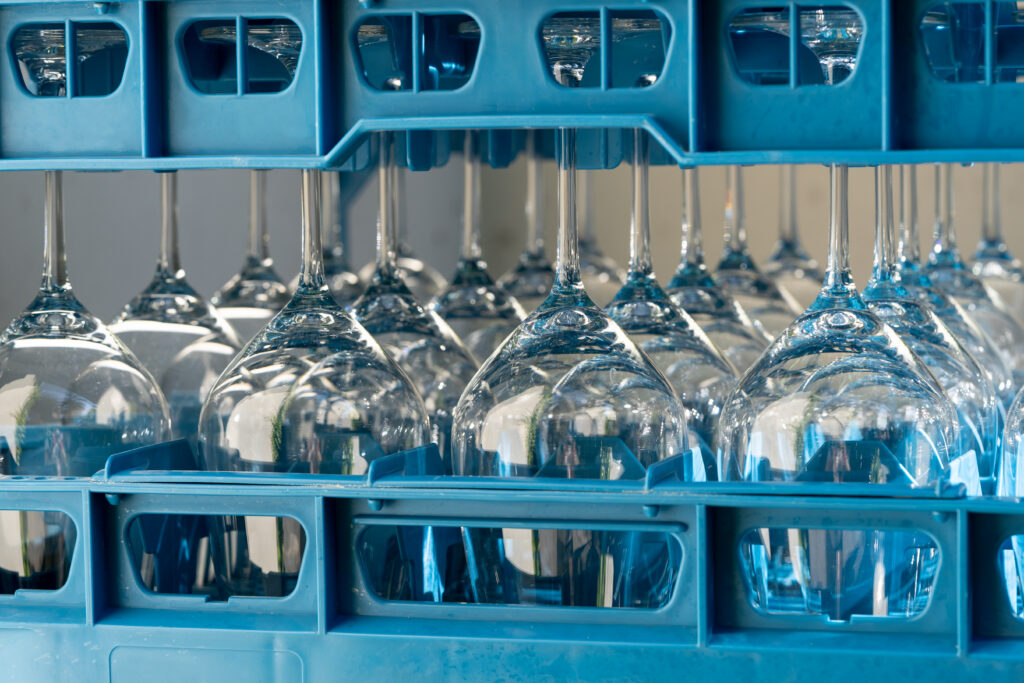
2. Test the Sanitizer Concentration
Low-temperature machines rely on chemical sanitizer rather than extremely hot water. For this system to work properly, the sanitizer must reach the correct concentration during the final rinse.
Use the appropriate test strips for the chemical your machine uses. Dip the strip according to the package instructions, and compare the result with the recommended range for the product and machine.
The concentration should not be too low or too high. Too little sanitizer may not adequately sanitize the dishes. Too much can leave chemical residue and may damage tableware or machine components.
Testing should be part of the regular kitchen routine, not something that only happens when an inspector walks through the door. Keeping a sanitizing log makes it easier to spot changes before they become larger restaurant dishwasher sanitizer problems.
3. Inspect the Chemical Supply and Dosing System
A full sanitizer container does not necessarily mean sanitizer is reaching the dishwasher. The chemical still needs to travel through the supply line and enter the machine at the correct point in the cycle.
If your commercial dishwasher is not sanitizing, inspect the chemical system for obvious problems. Look for:
- An empty or nearly empty sanitizer container
- Kinked or pinched tubing
- A disconnected supply line
- Air bubbles in the chemical line
- Cracked, brittle, or leaking tubing
- A blocked chemical pickup tube
Make sure the correct chemical is connected to the correct line. In a busy kitchen, containers get moved, lines get bumped, and occasionally something ends up where it has absolutely no business being.
If the lines appear fine but the sanitizer reading remains incorrect, the dosing equipment may need to be cleaned, calibrated, or repaired by a technician.
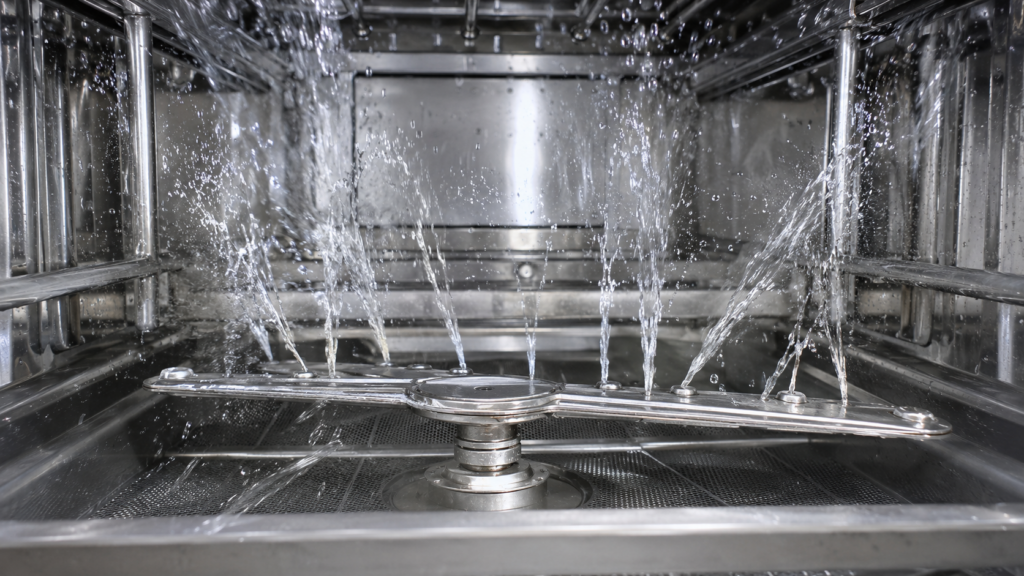
4. Check the Spray Arms and Rinse Jets
The spray arms must distribute water across every surface in the rack. When the arms or rinse jets are blocked, some dishes may not receive enough wash water, heat, or sanitizer.
Turn the machine off and allow it to cool before inspecting the spray arms. Check that they move freely and that the openings are not blocked by food, labels, toothpicks, mineral deposits, or other debris.
Remove and clean the spray arms according to the manufacturer’s instructions. Avoid using tools that could widen or damage the openings. Those holes are designed to create a specific spray pattern, and an enthusiastic encounter with a screwdriver can make the problem worse.
Also inspect the arms for cracks, loose fittings, and visible damage. Even a clean spray arm cannot do its job properly if water is escaping through the wrong places.

5. Look for Scale Buildup
Hard water minerals can leave scale on heating elements, spray jets, temperature probes, and other internal components. Over time, this buildup can restrict water flow and make it harder for the dishwasher to reach or maintain the correct temperature.
Common signs of scale include chalky white deposits, cloudy glassware, poor spray performance, and increasingly inconsistent commercial dishwasher temperature readings.
When scale contributes to a commercial dishwasher not sanitizing, the machine may need to be delimed. Follow the dishwasher manufacturer’s instructions and use a product approved for commercial dishwashing equipment. Mixing incompatible chemicals or pouring in a random cleaning product from the supply cupboard is not a shortcut worth taking.
Heavy buildup may require professional cleaning, especially if scale has collected around heating components or inside parts that staff cannot safely access.
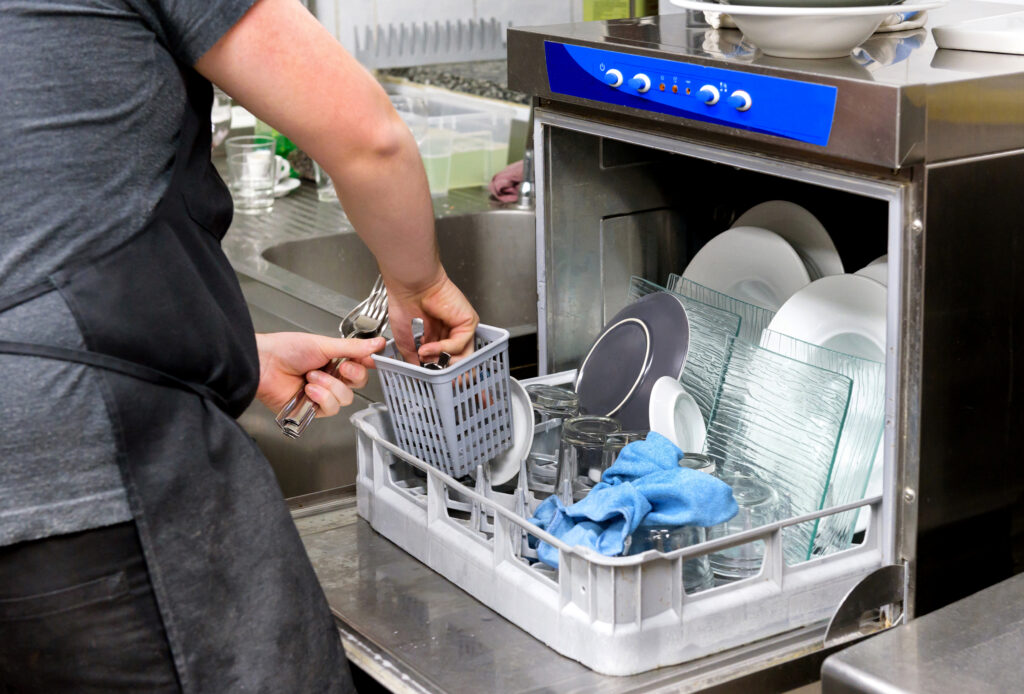
6. Review How the Machine Is Being Loaded and Operated
Sometimes the machine is working correctly, but the dishes are preventing it from doing its job.
Overloaded racks and nested dishes can block water and sanitizer from reaching the entire surface. Bowls, cups, and containers should be positioned so that water can drain rather than collect inside them. Large trays and pans should not block the spray arms or prevent them from turning.
Staff should also remove food scraps before loading the dishwasher and use the correct cycle. Opening the door early, interrupting a cycle, or pushing racks through too quickly can prevent the machine from completing the final rinse.
Clear procedures help every shift use the dishwasher consistently. A short loading guide near the machine can be surprisingly useful, particularly when new employees are being trained.
7. Confirm That the Machine Has Proper Water Flow
A dishwasher needs the correct water supply, pressure, and circulation to wash and sanitize consistently. Weak spray, slow filling, incomplete cycles, or noticeably uneven results can indicate a water-flow problem.
If your commercial dishwasher is not sanitizing, check that the water supply valve is fully open and that there are no obvious interruptions to the building’s water supply. Clean accessible filters and screens according to the manufacturer’s directions.
Problems with rinse pressure, pumps, valves, or internal plumbing are generally not staff-level fixes. A service technician can test these components and determine whether the machine is receiving and circulating enough water.
Know When It Is Time for Commercial Dishwasher Service
Temperature labels, chemical test strips, and sanitizing logs can help you confirm whether the machine is performing properly. If the readings remain outside the required range after basic checks, it is time to have the dishwasher inspected.
You should also arrange service if the problem keeps returning or if you notice leaks, unusual noises, inconsistent cycles, damaged parts, or poor rinse pressure. A professional inspection can identify issues within the heating, chemical-delivery, rinse, and pumping systems before they lead to a complete shutdown.
If your commercial dishwasher is not sanitizing, Fluid Dishwasher Service can help you find out why. We will inspect the machine, explain what we find, and let you know what needs attention before completing additional work. Because dishes are supposed to leave the dishwasher cleaner than they went in. That really should not be too much to ask.

Service & Repair Specialist