Choosing a commercial dishwasher sounds pretty straightforward until you actually have to do it.
Then you start hearing about undercounter machines, door-type machines, conveyor systems, glasswashers, high-temperature models, chemical sanitizing, electrical requirements, water supply, drainage, and a whole bunch of other things you probably didn’t expect to think about when you opened a restaurant.
The good news is that choosing between the different types of commercial dishwashers gets much easier once you know what your kitchen actually needs.
At Fluid Dishwasher, we work with restaurants and commercial kitchens throughout the Lower Mainland, helping operators choose, install, maintain, and repair the equipment that keeps their kitchens moving. Here’s what you need to know before choosing your next commercial dishwasher machine.
Start With Your Kitchen, Not the Dishwasher
There isn’t one restaurant dishwasher that’s right for everybody.
A small café washing cups, plates, and cutlery throughout the day has very different needs from a busy restaurant turning over hundreds of place settings during a dinner rush.
Before comparing the different types of commercial dishwashers, think about four things: how many dishes you need to wash, how quickly they need to come back into service, how much space you have, and how your dishwashing area fits into the rest of the kitchen.
You also need to think about installation. Your available plumbing, drainage, electrical service, ventilation, and water temperature can all affect which machine makes sense.
A bigger or faster machine isn’t automatically better. The right machine is the one that can comfortably handle your busiest periods without taking up more space, water, energy, or money than you need.
Undercounter Commercial Dishwashers
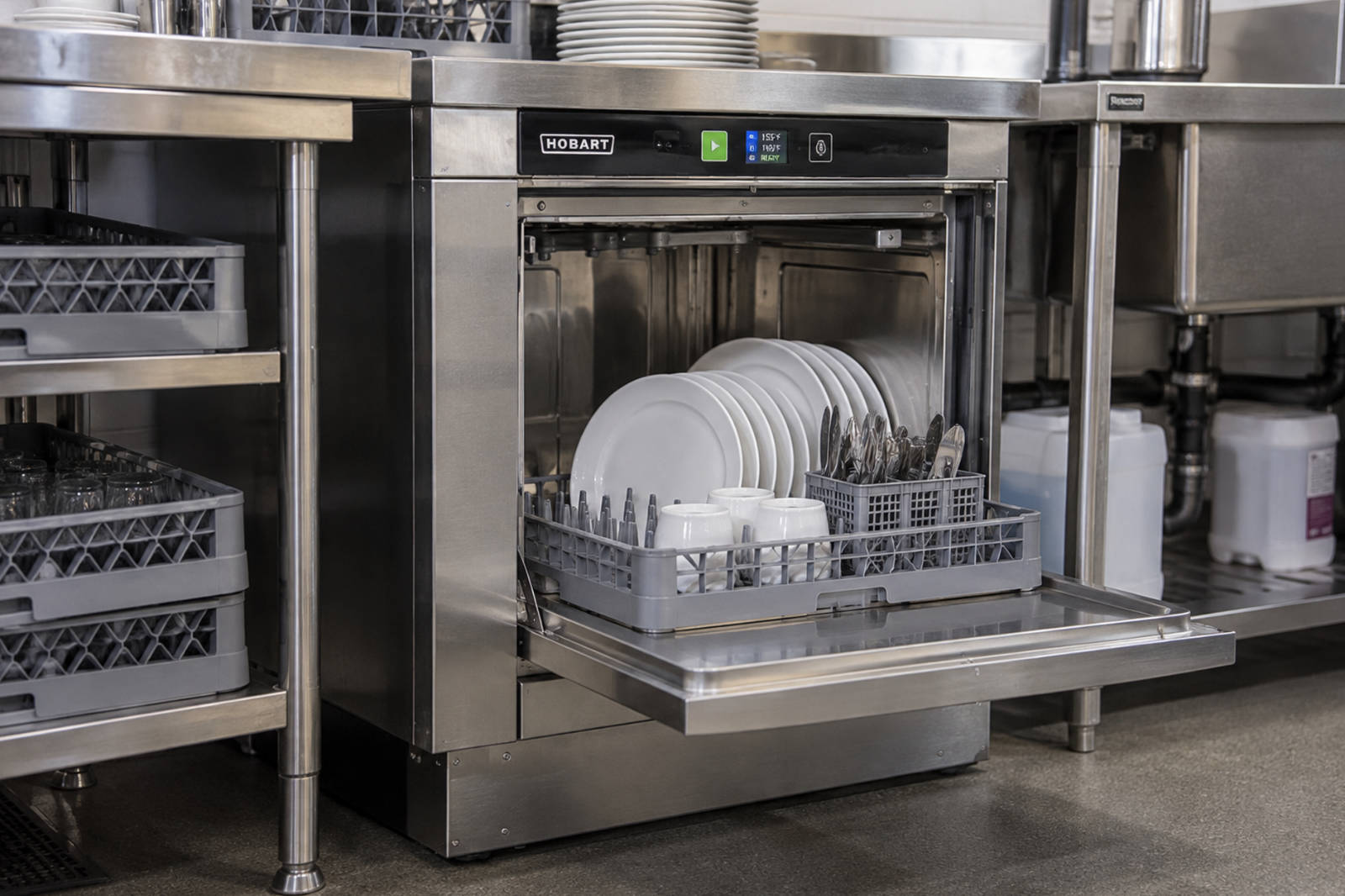
An undercounter commercial dishwasher looks a little like a residential dishwasher, but that’s about where the similarity ends.
Commercial machines are designed to wash much faster and withstand the demands of a working kitchen. An undercounter unit can fit neatly beneath a counter, making it a good option when space is limited.
These machines often work well in smaller restaurants, cafés, bars, coffee shops, and other businesses that don’t produce a huge volume of dirty dishes all at once.
They’re compact and convenient, but capacity is the trade-off. If your kitchen regularly has racks of dishes piling up during a rush, an undercounter machine may struggle to keep pace.
Among the different types of commercial dishwashers, undercounter units are often a practical choice when you need commercial performance without dedicating a large area of your kitchen to dishwashing.
Door-Type Commercial Dishwashers
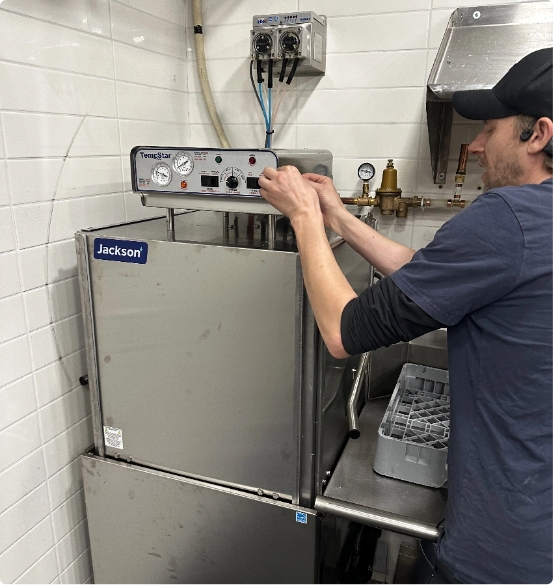
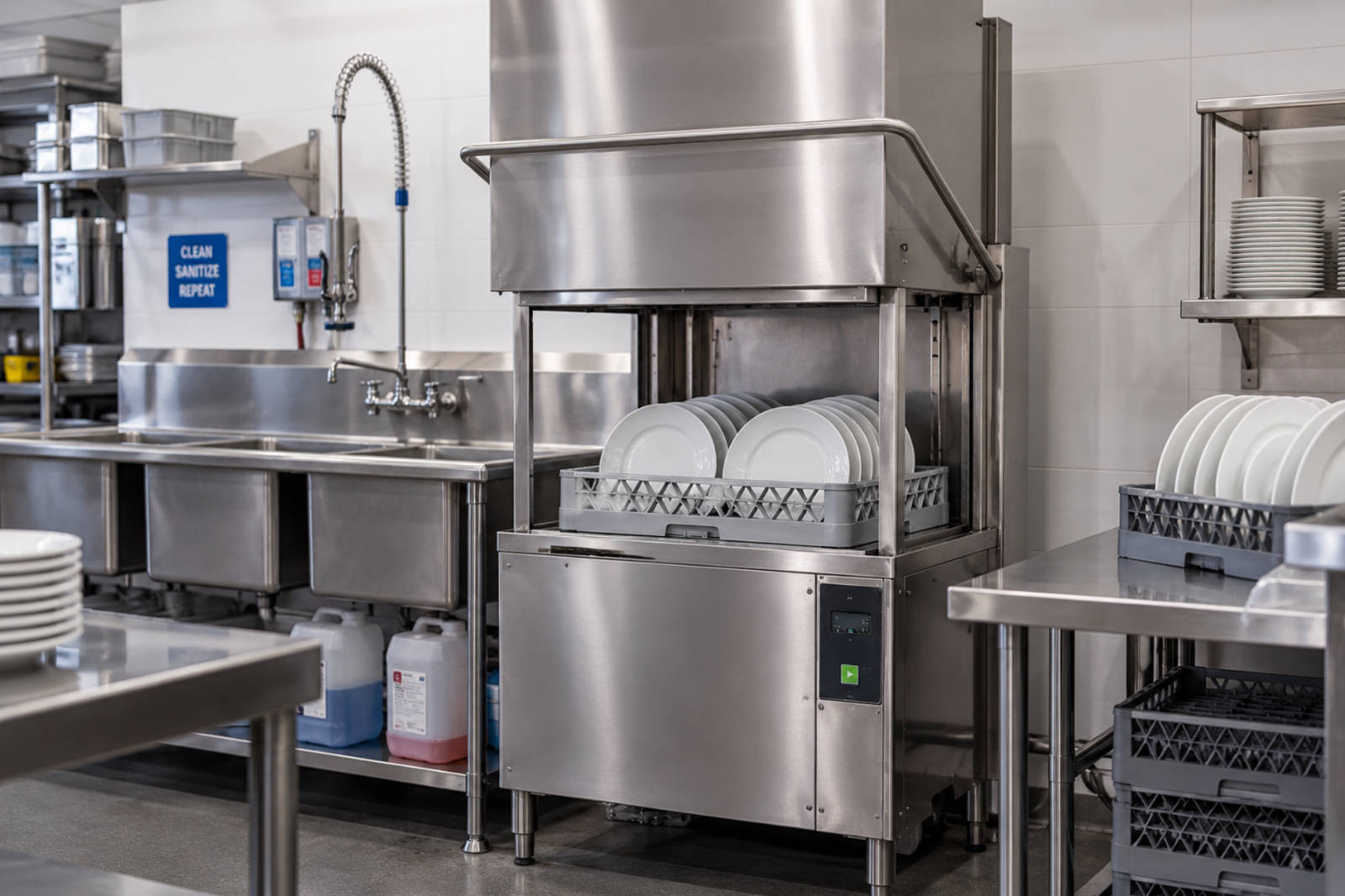
A door-type dishwasher, sometimes called a pass-through dishwasher, is one of the most common options in busy commercial kitchens.
Instead of loading dishes through a front door, staff slide a rack into the machine, lower the hood or door, run the cycle, and slide the clean rack out.
That setup can make a big difference to workflow.
Dirty dishes can enter from one side, move through the machine, and come out clean on the other. When the dishwashing area is designed properly, staff aren’t constantly working around each other or moving dirty dishes back through clean areas.
Door-type machines also handle more volume than most undercounter models, making them a good middle ground for restaurants that need speed and capacity without moving up to a full conveyor system.
They do require more room, though. You’ll need space for the machine itself and usually dish tables on either side.
Conveyor Dishwashers
Now we’re getting into serious dishwashing territory.
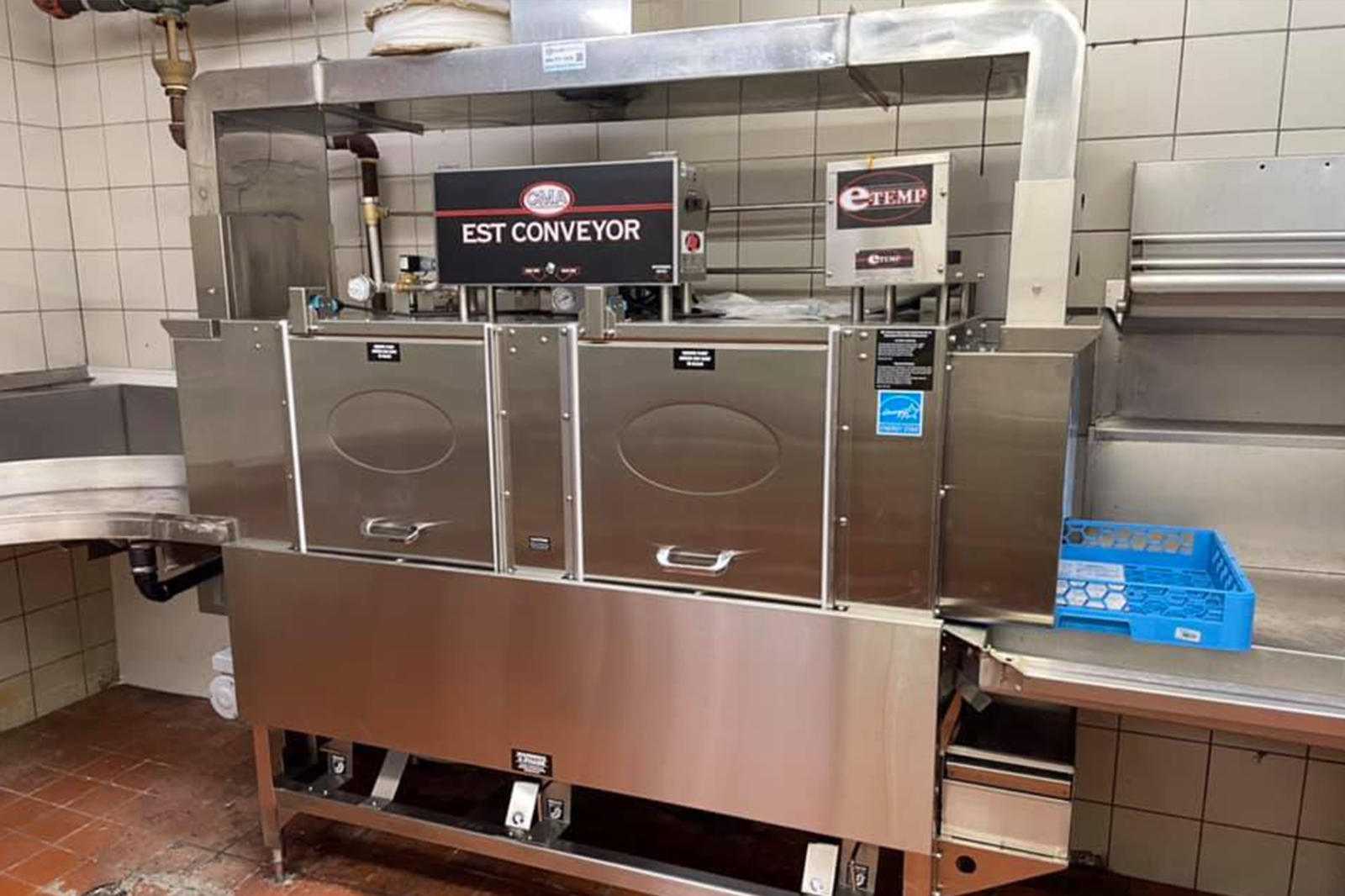
A conveyor dishwasher is designed for kitchens handling a high volume of dishes. Racks move through the machine continuously, allowing staff to keep loading dishes rather than waiting for one complete cycle before starting another.
You’ll commonly see these machines in large restaurants, hotels, cafeterias, institutions, and other high-volume foodservice operations.
Of all the types of commercial dishwashers, conveyor systems offer some of the highest capacity. They can make a huge difference in a kitchen where dishes need to move quickly and consistently throughout a busy service.
But capacity comes with requirements.
Conveyor machines need considerably more space than smaller units. Installation can also involve more substantial plumbing, drainage, electrical, and ventilation requirements. They represent a bigger investment, so it doesn’t make much sense to install one if your kitchen will never come close to using its capacity.
If you genuinely need that volume, however, a conveyor system can dramatically improve dishroom efficiency.
Commercial Glasswashers
Not everything going through your dish area is a dinner plate.
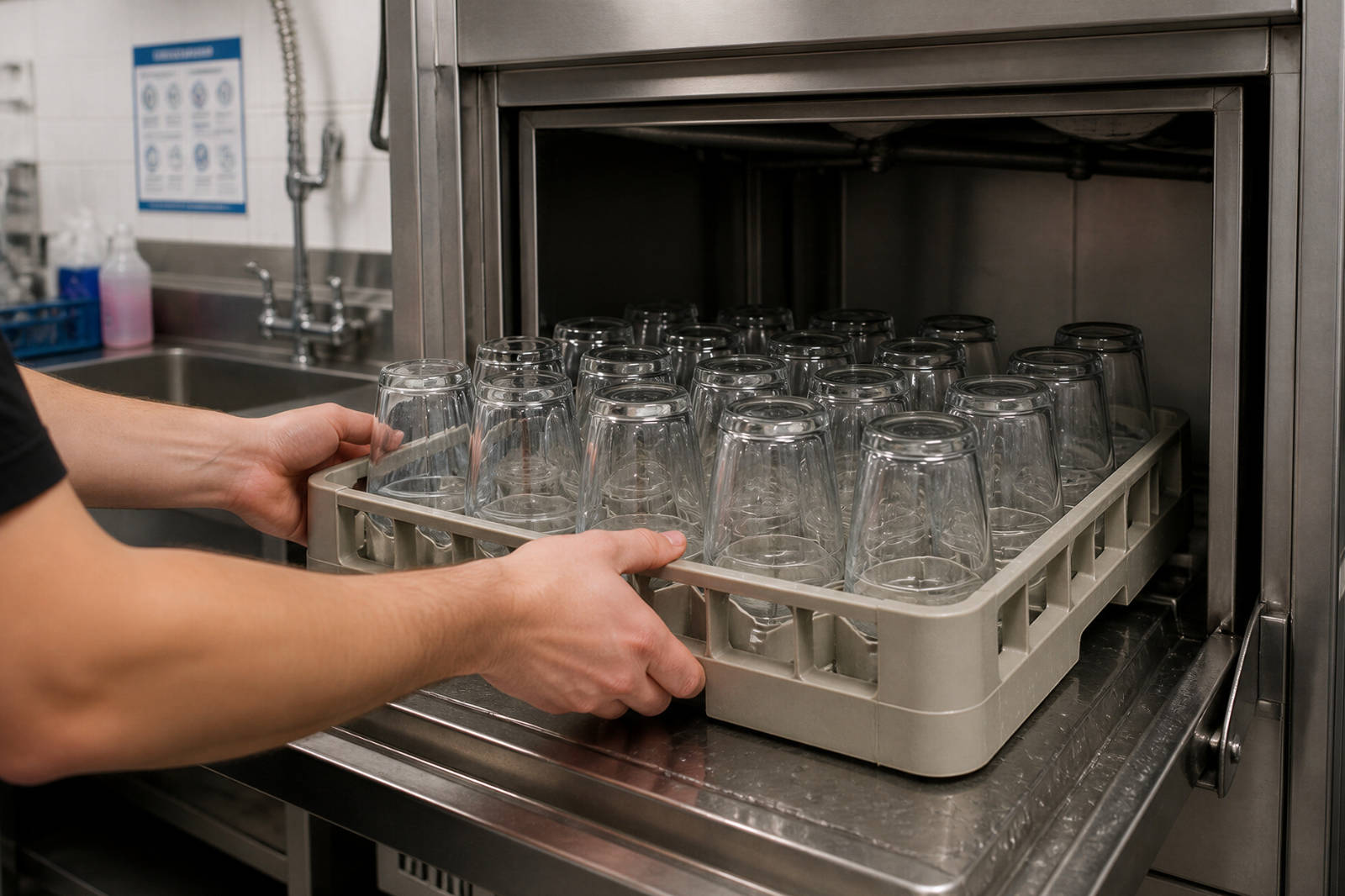
Bars, breweries, tasting rooms, restaurants, and other businesses serving a high volume of beverages may benefit from a dedicated commercial glasswasher.
Glasswashers are designed to clean glassware quickly while helping reduce the handling that can lead to chips and breakage. They can also keep glasses moving during busy periods instead of filling your main dishwasher with rack after rack of drinkware.
A dedicated glasswasher isn’t necessary for every restaurant. But when glassware represents a significant part of your dishwashing volume, it can be an excellent addition to the kitchen or bar.
That’s why comparing types of commercial dishwashers isn’t always about choosing one machine. In some operations, the best setup may include more than one.
How Much Dishwasher Capacity Do You Actually Need?
This is where choosing a commercial dishwasher gets interesting.
Average daily volume matters, but your busiest hour may matter even more.
If most of your dishes arrive in the dish pit between 6:00 and 8:00 p.m., you need equipment that can handle that rush. A machine that technically has enough capacity for your total daily volume isn’t much help if dirty dishes are stacked everywhere during dinner service.
Think about how many racks you need to process during your busiest periods and how quickly dishes, glasses, and utensils need to return to service. Natural Resources Canada also recommends considering the number of people your operation serves when choosing the right size commercial dishwasher.
You also want some breathing room. Choosing a machine that is already working at its absolute maximum capacity on a normal Friday night doesn’t leave much room for growth, special events, or an unexpectedly busy service.
Don’t Forget About Commercial Dishwasher Installation
Finding a machine that fits physically into the kitchen is only part of the equation.
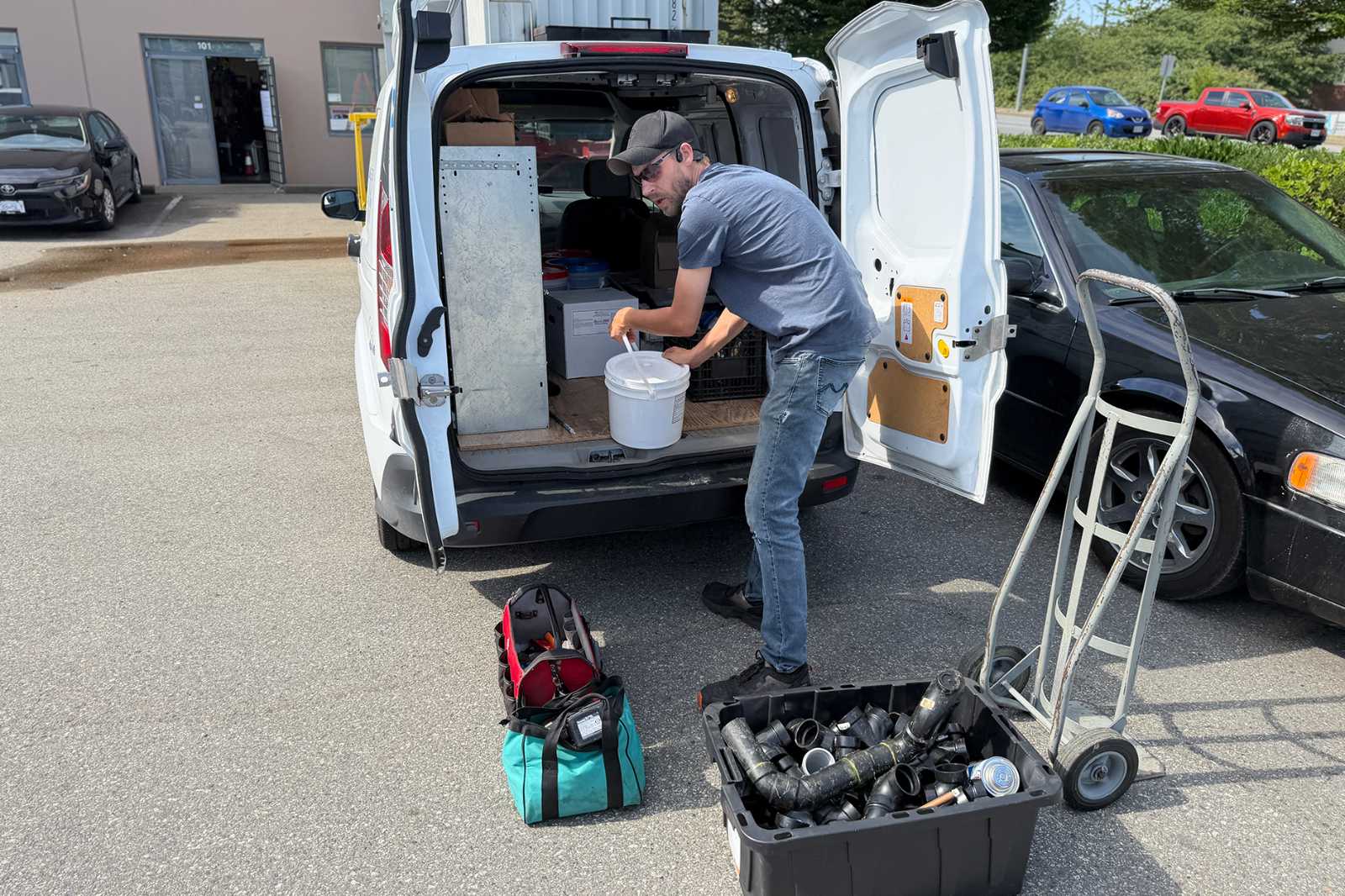
Different types of commercial dishwashers can have very different installation requirements. Depending on the machine, you may need to consider electrical capacity, hot water supply, drainage, ventilation, chemical systems, and available clearance.
This is one of those situations where measuring the empty space and ordering something that fits can become an expensive mistake.
B.C.’s Food Premises Regulation also requires food-service equipment to be maintained in good working order and dishes and utensils to be properly washed and sanitized. Choosing the right machine and having it properly installed gives you a much better starting point for meeting those requirements.
Which Commercial Dishwasher Is Right for You?
As a general guide, an undercounter machine may be a good fit for smaller operations with lighter volume. Door-type machines work well for many busy restaurants. Conveyor systems are built for high-volume kitchens, while dedicated glasswashers can make life much easier for operations handling a lot of glassware.
But those are starting points, not hard rules.
The best way to compare the types of commercial dishwashers is to look at the whole picture: your kitchen, your busiest service periods, your staff workflow, your available utilities, and where you expect the business to go in the next few years.
You don’t want to spend more than necessary on a machine that’s too big for your operation. You also don’t want to save money upfront and discover six months later that your dishwasher can’t keep up.
Need Help Choosing a Commercial Dishwasher?
Fluid Dishwasher has been working with commercial dishwashing equipment in the Lower Mainland for years. We know the machines, we know the installation requirements, and, most importantly, we know that the right answer depends on how your kitchen actually operates.
If you’re comparing types of commercial dishwashers, replacing an older machine, or planning a new commercial dishwasher installation, talk to us before you make the decision.
We’ll help you find a dishwasher that fits your space, your volume, and the way your kitchen works.
Contact Fluid Dishwasher to talk about the right commercial dishwasher for your operation.

Service & Repair Specialist