
A commercial dishwasher is one of the hardest-working machines in a restaurant. When it stops cleaning properly—or stops running altogether—the effects spread quickly: dishes pile up, staff fall behind, service slows, and food-safety risks increase. A consistent commercial dishwasher maintenance routine helps prevent those problems by catching food buildup, blocked components, low chemical levels and unusual operating conditions before they become expensive repairs.
The following daily checklist gives restaurant staff a practical routine for opening, operating and closing the machine. It should always be used alongside the dishwasher manufacturer’s instructions, the chemical supplier’s guidance and applicable local food-safety requirements.
1. Inspect the Dishwasher Before the Shift
Begin each day with a quick visual inspection. Make sure the wash chamber is empty and that no debris was left inside overnight. Check the door, handle, curtains, racks and seals for visible damage. Confirm that filters, drain screens and scrap trays are clean, correctly positioned and secure.
Look under and around the machine for signs of leaking water or chemicals. Verify that the water, power and chemical supplies are available, then run a test cycle. Watch for warning lights, error codes, unusual noises, slow filling or poor drainage. Recording anything abnormal at the start of the shift makes commercial dishwasher maintenance easier and may prevent staff from relying on a machine that is not operating correctly.
2. Clean Filters, Screens and Scrap Trays
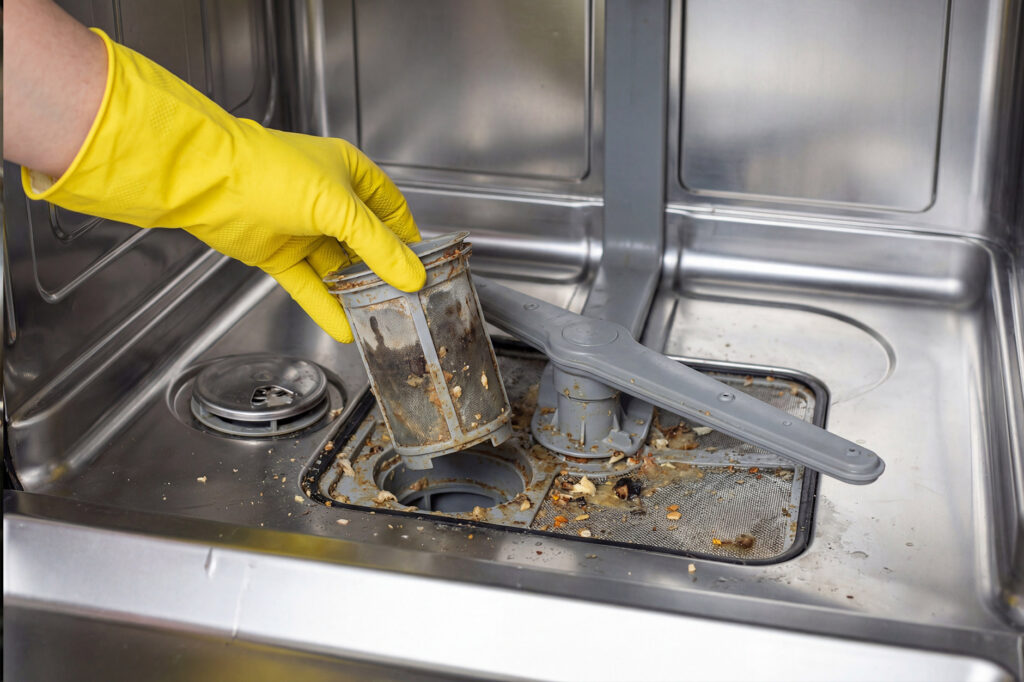
Filters and scrap trays keep food debris from recirculating through the wash water and clogging other components. Remove them according to the manufacturer’s instructions, empty all scraps into the appropriate waste container and rinse the parts with clean water. Use a soft brush to remove stubborn residue.
Do not bang filters against a sink or hard surface. This can bend them and prevent them from fitting properly. Inspect each piece for cracks, holes, warping or heavy mineral scale before reinstalling it securely.
In a high-volume kitchen, this task should not wait until closing. Check filters and screens between busy meal periods or whenever wash results begin to decline. Frequent filter cleaning is one of the simplest and most effective commercial dishwasher maintenance habits.
3. Check Spray Arms and Wash Jets
Spray arms need clear jets and unrestricted movement to reach every surface in a loaded rack. Remove the arms if the manufacturer permits it, and examine each jet for seeds, food particles, paper labels and mineral deposits. Clear blocked openings with an approved brush or cleaning tool—never with a sharp object that could enlarge or damage the jet.
Make sure each spray arm rotates freely. Check for cracks, loose fittings, bent sections and missing or unsecured end caps. Blocked or damaged spray arms can cause dirty dishes, repeated wash cycles and excessive detergent use. Including this inspection in daily commercial dishwasher maintenance helps staff correct a small cleaning issue before it places more strain on the machine.
4. Verify Detergent, Rinse Aid and Sanitizer
Check detergent, rinse-aid and sanitizer levels before the first rush. Replace low containers early so chemicals do not run out during service. Inspect dispensing tubes for air gaps, leaks, kinks, loose connections or crystallized product, and confirm that every line is connected to the correct container.
Never mix chemicals or transfer them into unlabelled containers. Staff should follow the product instructions and use the required personal protective equipment when changing or handling commercial cleaning chemicals.
For a low-temperature sanitizing machine, test the sanitizer concentration with the correct test strips and compare the reading with the machine manual, chemical supplier’s guidance and local requirements. Record the result rather than relying on a visual check. Chemical verification is both a food-safety responsibility and an essential part of commercial dishwasher maintenance.
5. Monitor Wash and Final-Rinse Temperatures
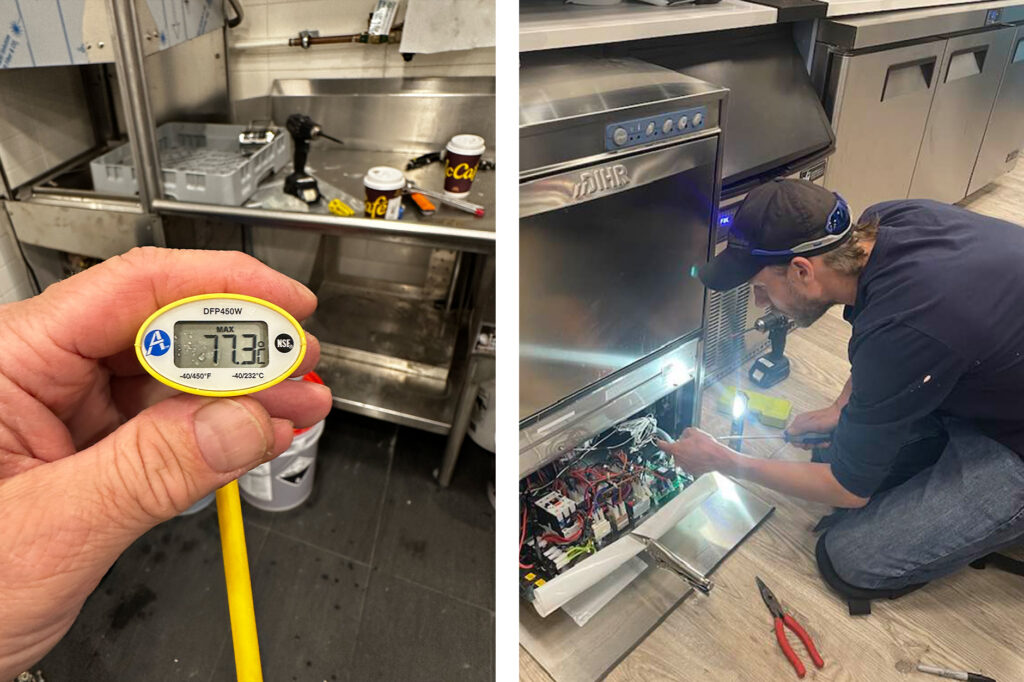
Check the displayed wash and final-rinse temperatures during the opening test cycle and periodically throughout the day. Record each reading on the daily log. Required temperatures vary by machine type and sanitizing method, so compare the readings with the equipment data plate, operating manual and applicable health requirements instead of relying on one general temperature range.
A reading outside the required range can point to a water-supply problem, scale buildup, a thermostat issue or trouble with a heating component or booster heater. Stop and notify a supervisor if the machine cannot meet its required operating conditions. Temperature monitoring allows commercial dishwasher maintenance problems to be identified before they produce racks of improperly cleaned or sanitized wares.
6. Use Good Cleaning and Loading Practices During Service
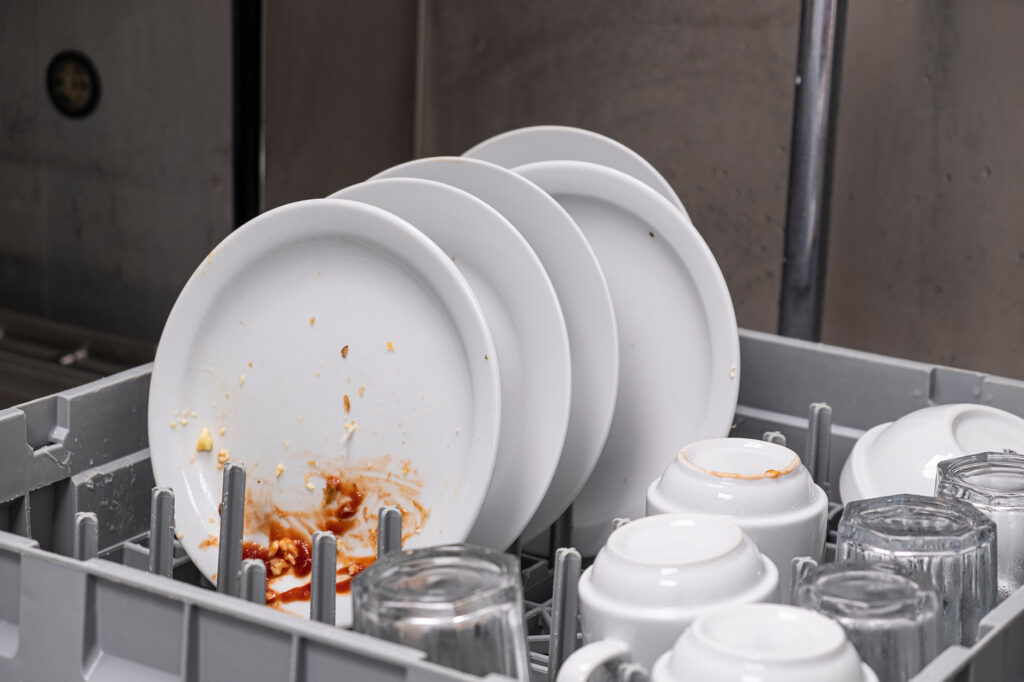
Daily care continues while the dishwasher is running. Scrape food waste and remove paper labels before loading. Pre-rinse wares when directed by the operating instructions, but avoid unnecessary water use. Place cups, plates, cutlery and cookware in the correct racks, and do not overload or stack items so closely that water cannot reach them. Pause to clean the filters when soil levels become heavy. Keep the floor around the machine dry and free of obstructions, and address leaks immediately. Proper scraping and loading may seem like operating basics, but they reduce debris, rewashing and strain on the equipment. They are a key part of responsible commercial dishwasher care.
7. Drain and Clean the Machine at Closing
At the end of the day, follow the manufacturer’s shutdown procedure and drain the tanks completely. Remove filters, screens, scrap trays, curtains, wash arms and any other approved removable parts. Clean them with the recommended products, rinse them thoroughly and inspect them before reinstallation.
Wipe the interior walls, doors, corners and tank surfaces to remove grease and residue. Avoid abrasive pads that could scratch stainless steel. Look for white mineral deposits, unpleasant odours or standing water. Delime the machine only with an approved chemical and at the frequency recommended by the manufacturer or service provider.
Clean exterior surfaces and controls carefully without spraying water onto electrical components. If recommended for the model, leave the door open so the interior can air-dry. This thorough closing routine is the most important daily stage of commercial dishwasher maintenance because buildup left overnight can harden, create odours and obstruct components.
8. Record Problems and Know When to Call for Service
Use a daily log to record staff initials, temperatures, sanitizer results and any defects discovered during inspection or cleaning. Clear records create accountability and help a technician spot recurring problems.
Staff should immediately report warning signs such as:
- Dishes that remain dirty, greasy or spotted after repeated cycles
- Water or chemical leaks
- Unusual noises, electrical odours or burning smells
- Slow filling, washing or draining
- Temperatures or sanitizer readings outside the required range
- Recurring error codes
- Damaged doors, seals, wiring, racks or controls
Employees should never bypass a safety device or attempt a repair they are not trained and authorized to perform. If the machine cannot clean and sanitize wares as required, take it out of service and contact a qualified technician.
Make Daily Maintenance Part of Every Shift
The most effective routine is one that clearly assigns opening, mid-shift and closing tasks. A signed checklist makes expectations easy to follow, helps managers confirm that essential checks were completed and gives service technicians useful operating history.
Consistent commercial dishwasher maintenance protects sanitation, reduces rewashing, extends equipment life and lowers the risk of disruptive breakdowns. For restaurants seeking commercial dishwasher maintenance in Vancouver, daily staff care should be paired with scheduled professional inspections and prompt service when warning signs appear.

Service & Repair Specialist